
Case study
Pharmaceutical Cold Rooms
Typical pharmaceutical storage may operate around 2°C to 8°C, with system design based on product sensitivity, room requirements, monitoring needs, and site conditions.
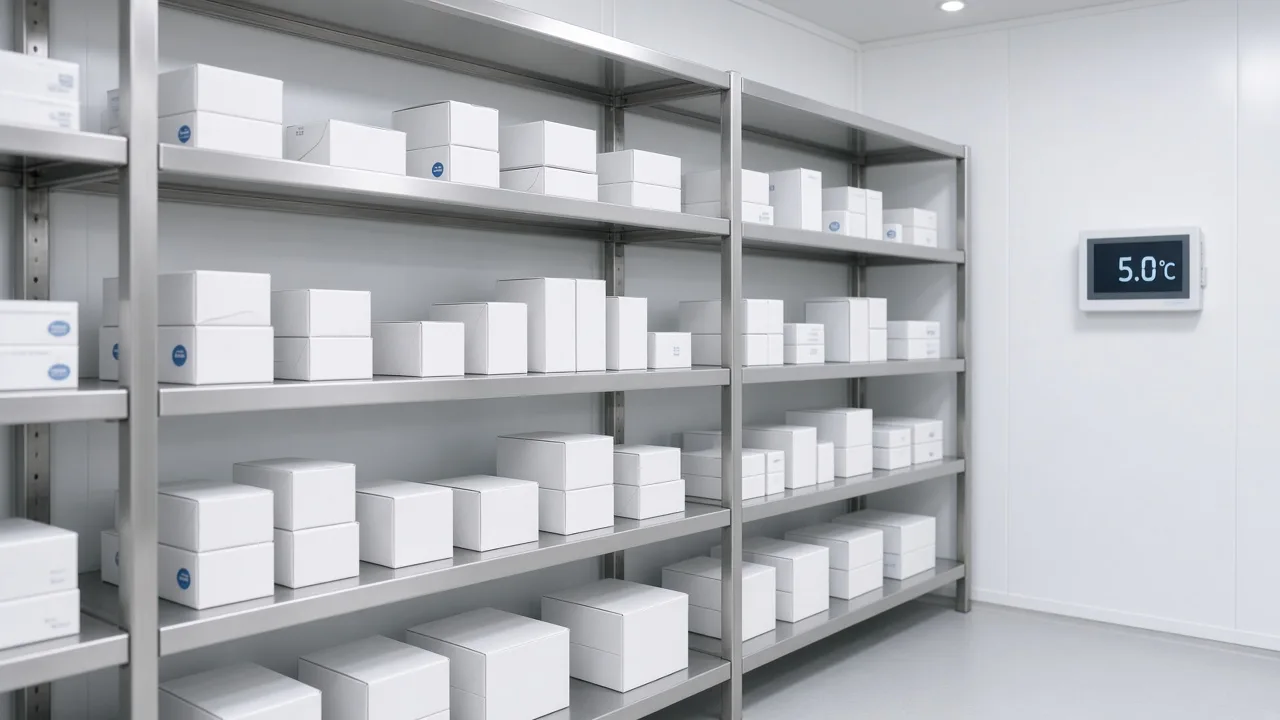
This is the application Uniref designs for. Temperature bands are typical design ranges. Room volume is confirmed during the site assessment.
The application
Pharmaceutical cold rooms hold medicines, vaccines and biological samples that lose effectiveness when the temperature drifts. Uniref treats this as its own duty, separate from food or frozen storage, because the acceptable band is narrow and the room has to stay inside it.
Typical temperature
Medicines and vaccines are designed around 2°C to 8°C. Biological samples such as blood, tissue and plasma are a different duty, commonly from −20°C down to −80°C, and are not stored in the same room as the 2°C to 8°C products. These are typical design ranges. The product list on a project sets the actual setpoint.
What the design covers
The room is specified for stable airflow and temperature monitoring, so a rise or a cold spot is visible before the product is affected. Equipment is selected for that duty cycle, including the high ambient conditions common on Indian sites, rather than copied from a food cold room.
Confirmed on site
Room volume, the mix of products, power and how staff move through the store are confirmed during the site assessment. Uniref does not publish a standard room size for this category.


