
01
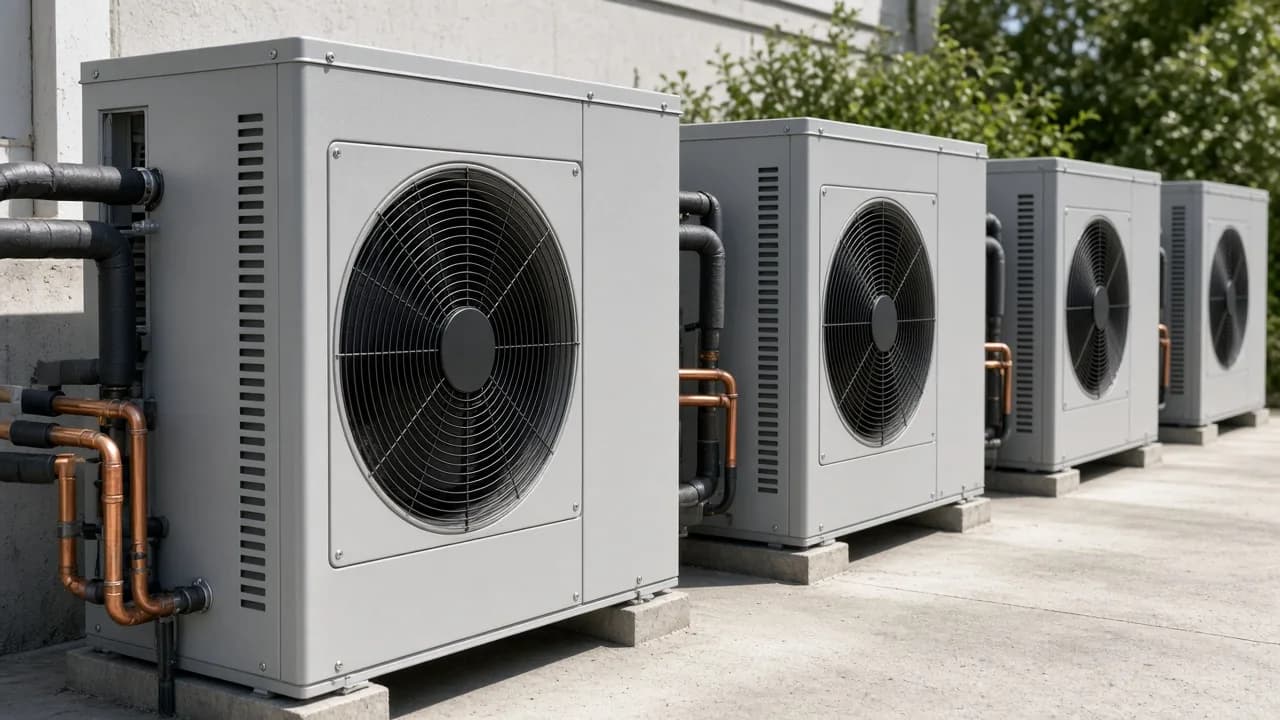
Freon Based Refrigeration Systems
Freon based refrigeration systems can be considered for applications where the required temperature, heat load, site conditions, and refrigeration design support this configuration.
Industrial Refrigeration Engineering and Project Delivery
Built around your process
Uniref designs, supplies, installs, and commissions industrial refrigeration systems for temperature sensitive products and industrial applications across India. Each system is engineered around the required temperature, heat load, product conditions, site utilities, ambient conditions, and operating process.
Engineering coordination from Jaipur. Call +91 7222 001 000.
Temperature duty
Ambient
+15°C to +25°C
Plant, room, and process, engineered as one refrigeration system.
20+ years of experience, 2,500+ projects completed, offices in Jaipur, Chennai, Delhi and Indore, 40+ service locations, 4+ assembly facilities.
20+
Years of experience
2,500+
Projects completed
4
Offices in Jaipur, Chennai, Delhi and Indore
40+
Service locations
4+
Assembly facilities
Industrial refrigeration
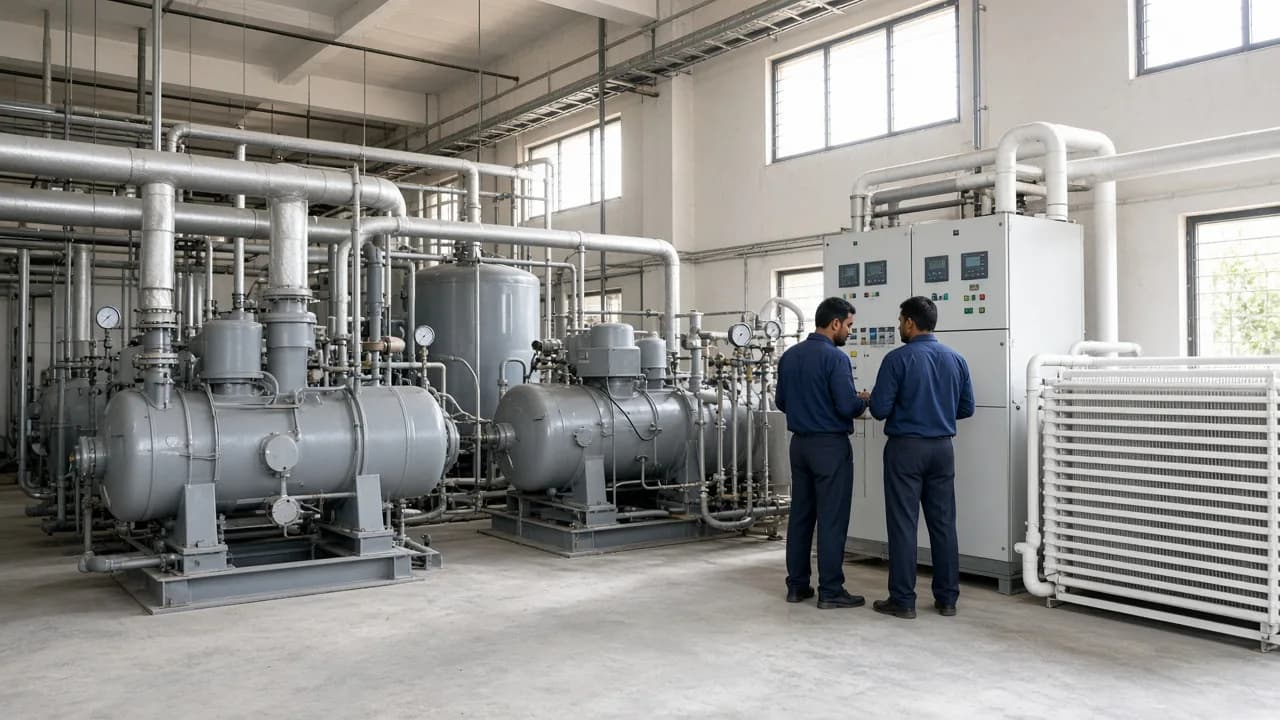
Industrial facilities depend on controlled refrigeration when products, processes, or storage areas need defined temperature conditions. Uniref develops refrigeration systems around the actual process, from heat load calculation and equipment selection to installation, commissioning, and after sales support.
The refrigeration plant is not selected from facility size alone. Product temperature, incoming product conditions, room dimensions, daily movement, ambient conditions, humidity, door openings, power availability, and site utilities all influence the final system configuration.
Application engineering
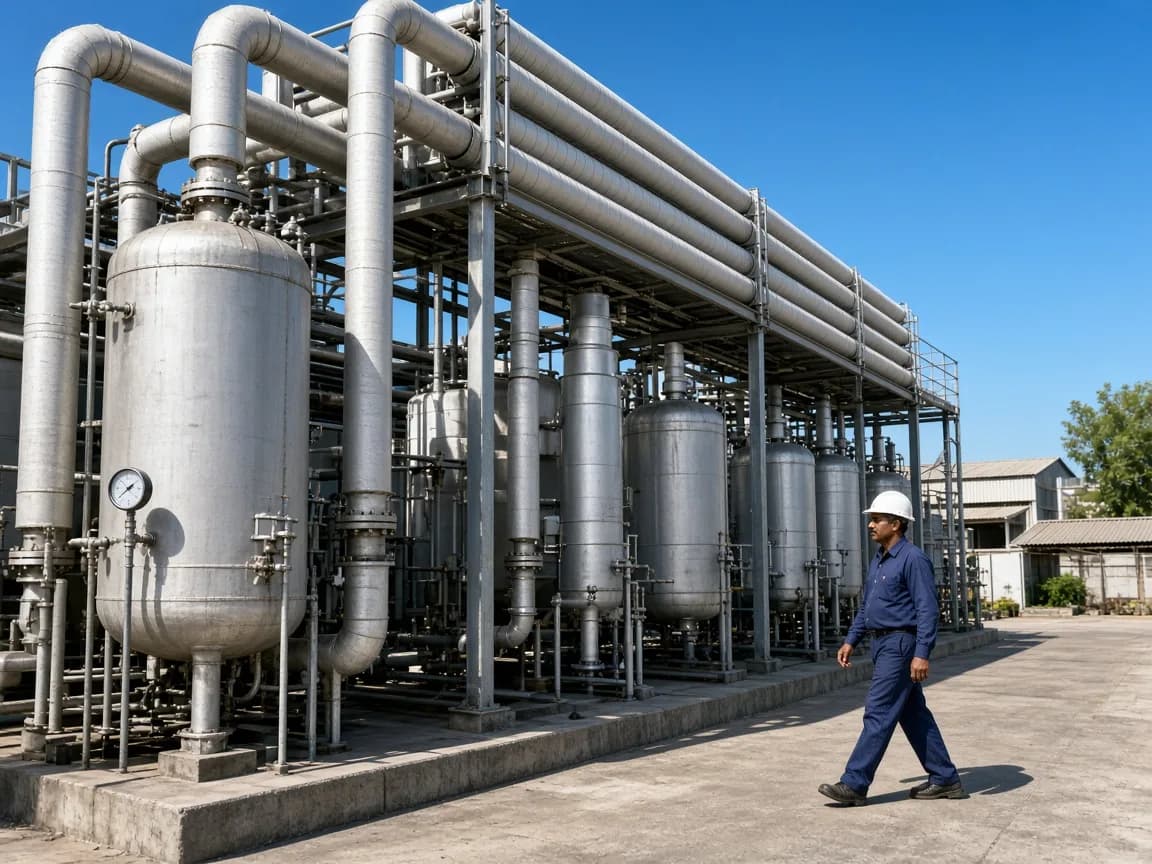
Every industrial refrigeration project has different operating requirements. Uniref assesses the refrigeration duty, required temperature, heat load, product characteristics, site conditions, and available utilities before selecting the system configuration.
The engineering scope can include refrigeration equipment, cold rooms, controls, monitoring, electrical systems, installation, testing, and commissioning. The complete system is coordinated so that equipment selection remains aligned with the calculated refrigeration requirement.
Heat load calculation establishes the refrigeration duty by considering product load, ambient conditions, room dimensions, infiltration, equipment, lighting, and other sources of heat gain.
Temperature control is designed around the required operating range and the conditions specified for the stored product or industrial process.
Compressors, condensing units, evaporators, controls, and associated components are selected according to the calculated duty and operating conditions.
The refrigeration configuration is developed according to the application, required temperature, heat load, site utilities, and operating process.
Temperature controllers, sensors, alarms, data logging, and monitoring provisions can be integrated according to the facility's operational requirements.
The refrigeration equipment and associated systems are installed, tested, commissioned, and prepared for operation according to the project design.
Systems
Different industrial applications require different refrigeration configurations. Uniref evaluates the operating conditions before selecting the appropriate refrigeration system and associated equipment.
01
Freon based refrigeration systems can be considered for applications where the required temperature, heat load, site conditions, and refrigeration design support this configuration.
02
Ammonia based systems can be considered where the refrigeration load, temperature requirements, operating conditions, and site infrastructure make the configuration appropriate.
03
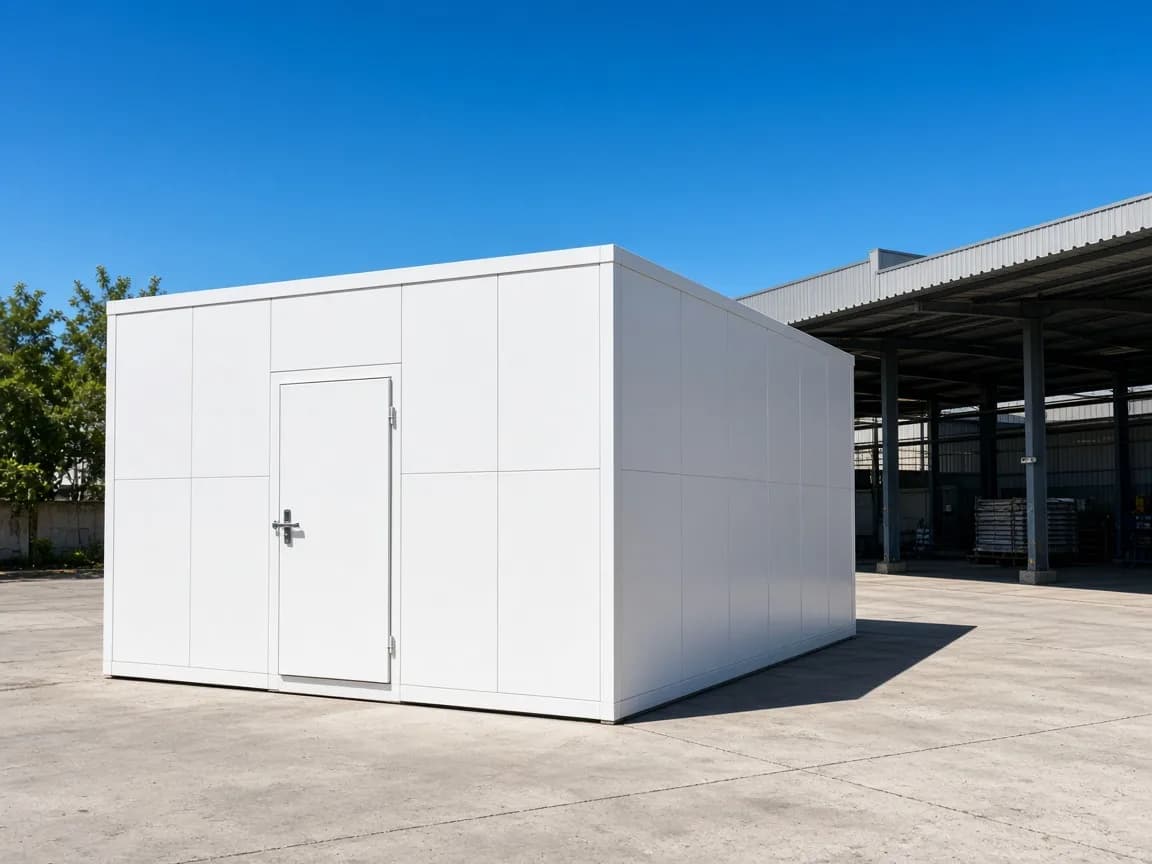
Air cooled systems use ambient air for heat rejection and can be considered according to the site's ambient conditions, refrigeration duty, and available utilities.
04
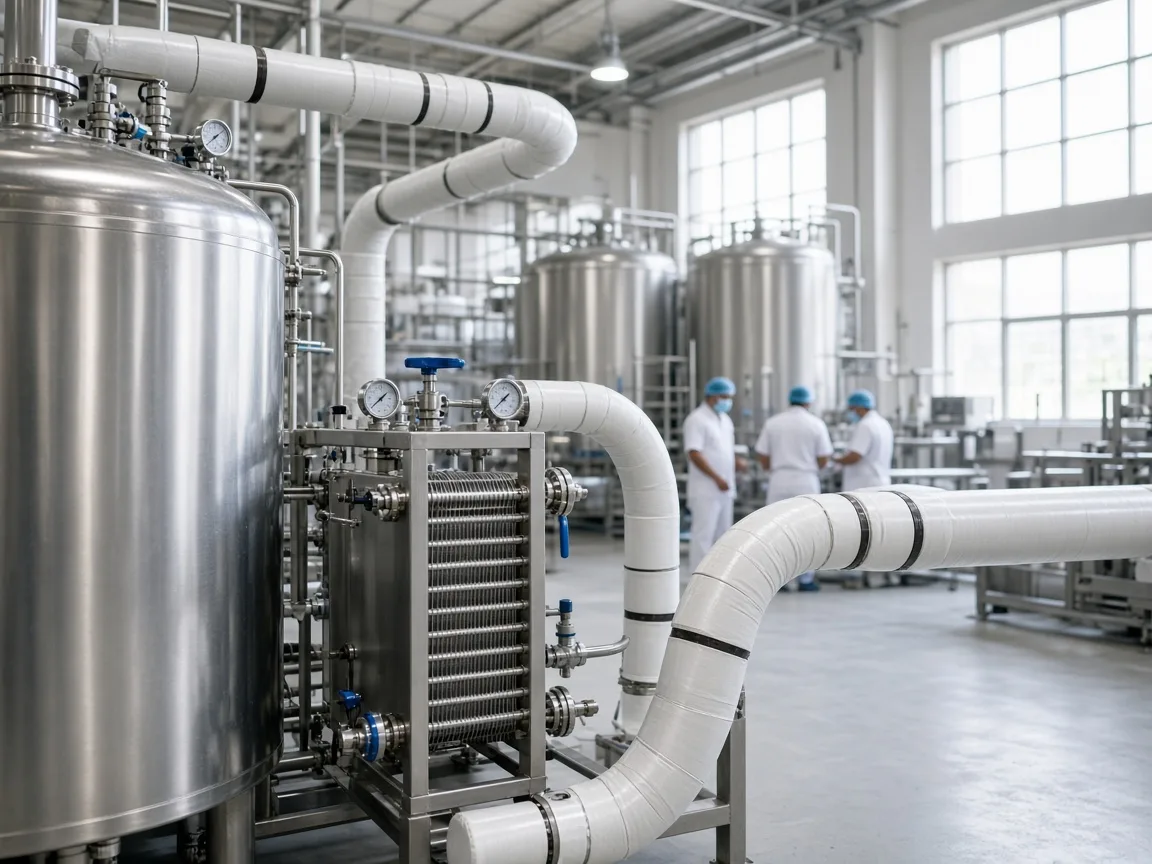
Water cooled systems can be considered where suitable water availability, heat rejection requirements, and site infrastructure support their use.
05
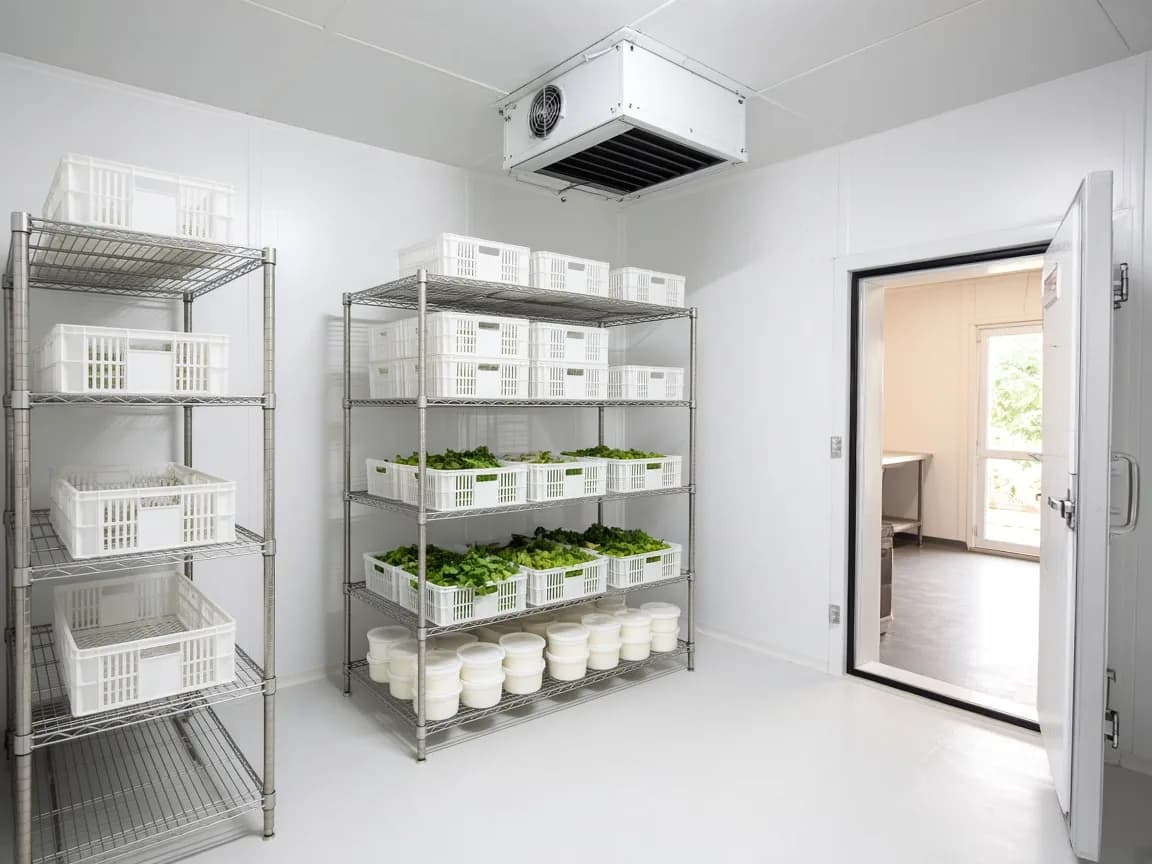
Chilled refrigeration systems are designed for applications requiring controlled temperatures above freezing. The refrigeration duty is established from the product, room, process, and operating requirements.
06
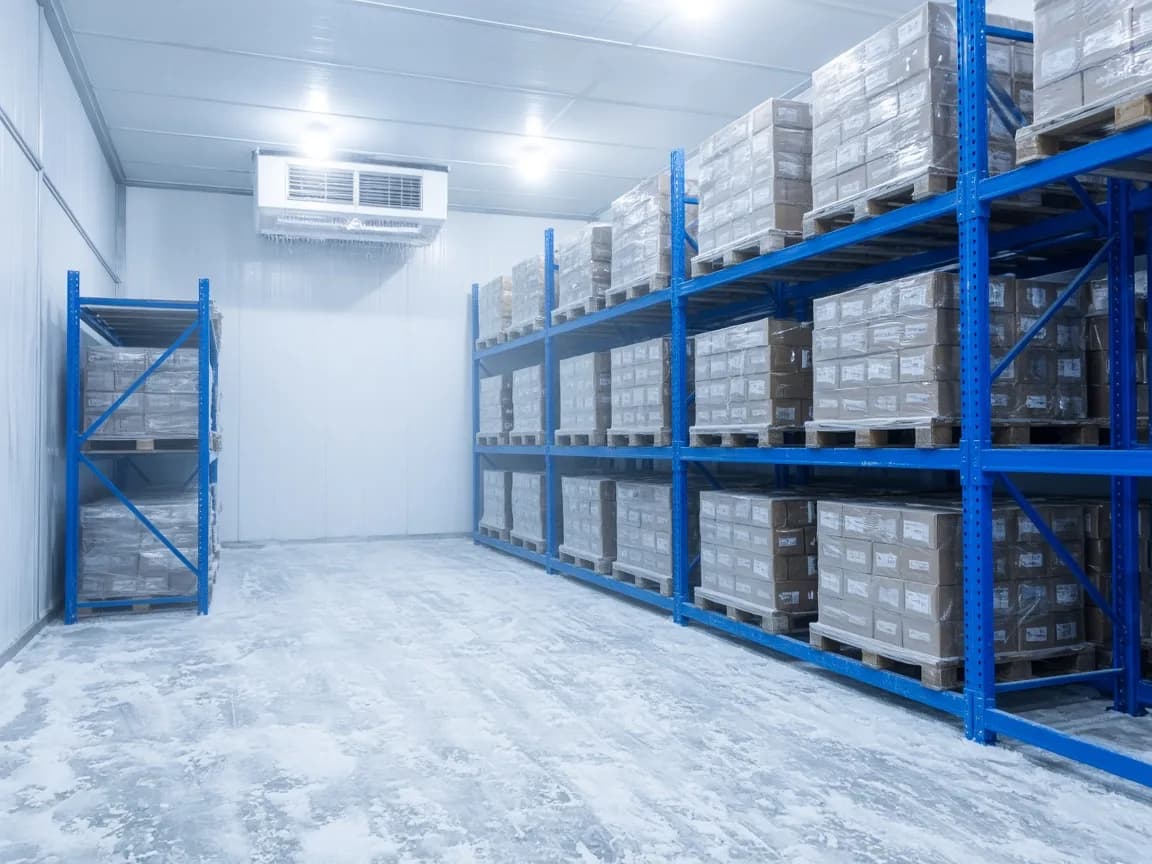
Frozen refrigeration systems are designed for lower temperature applications, commonly near minus 18°C or lower. Equipment selection depends on the required temperature, heat load, product conditions, and site requirements.
07
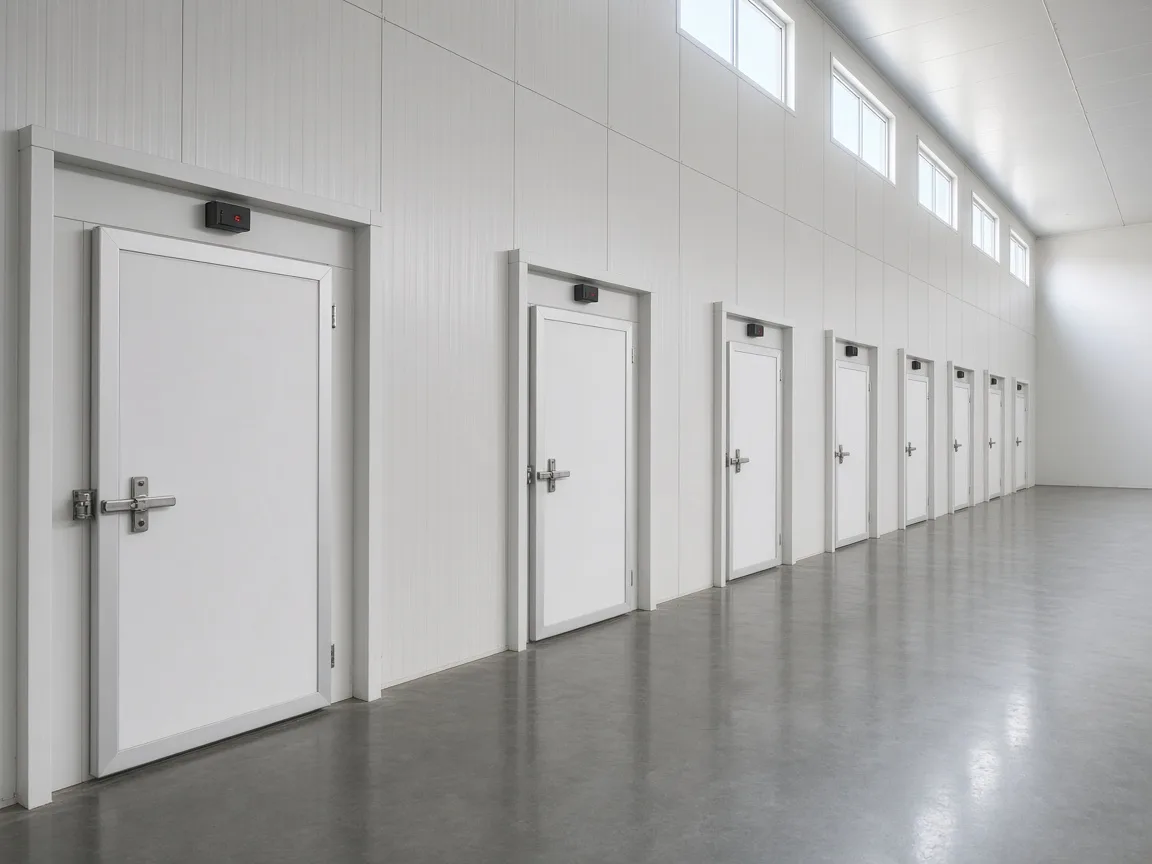
Multi temperature systems can support facilities with separate rooms or zones operating at different temperature ranges. Each zone is assessed according to its individual refrigeration duty and storage requirements.
08
Process refrigeration can be designed around an industrial process that requires controlled cooling conditions. The required temperature, heat load, operating cycle, and site utilities are considered during engineering.
Planning an Industrial Refrigeration Project?
Share your required temperature, product or process, approximate load, site location, and operating requirements with our engineering team.
Industries
Industrial refrigeration requirements vary according to the product, process, temperature range, storage method, and operating cycle. The refrigeration system is selected after these requirements and the site conditions are understood.
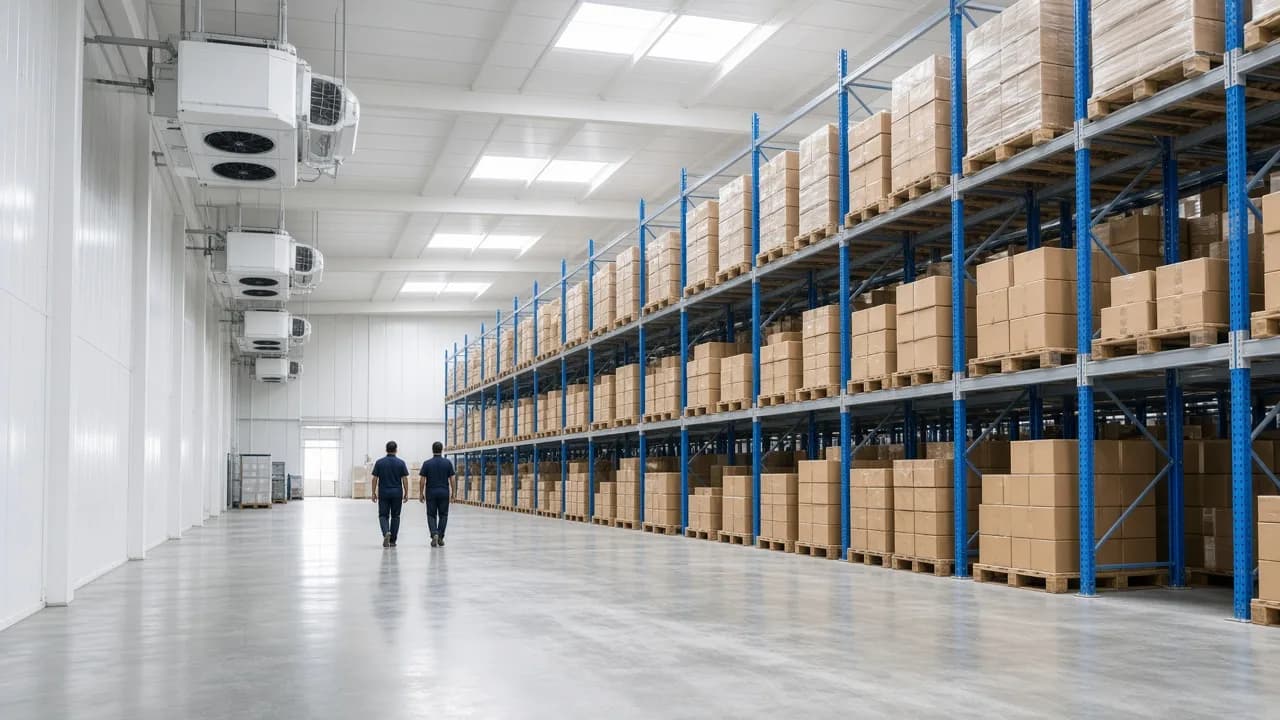
Refrigeration systems maintain controlled room conditions for products requiring chilled, frozen, or other defined temperature environments.
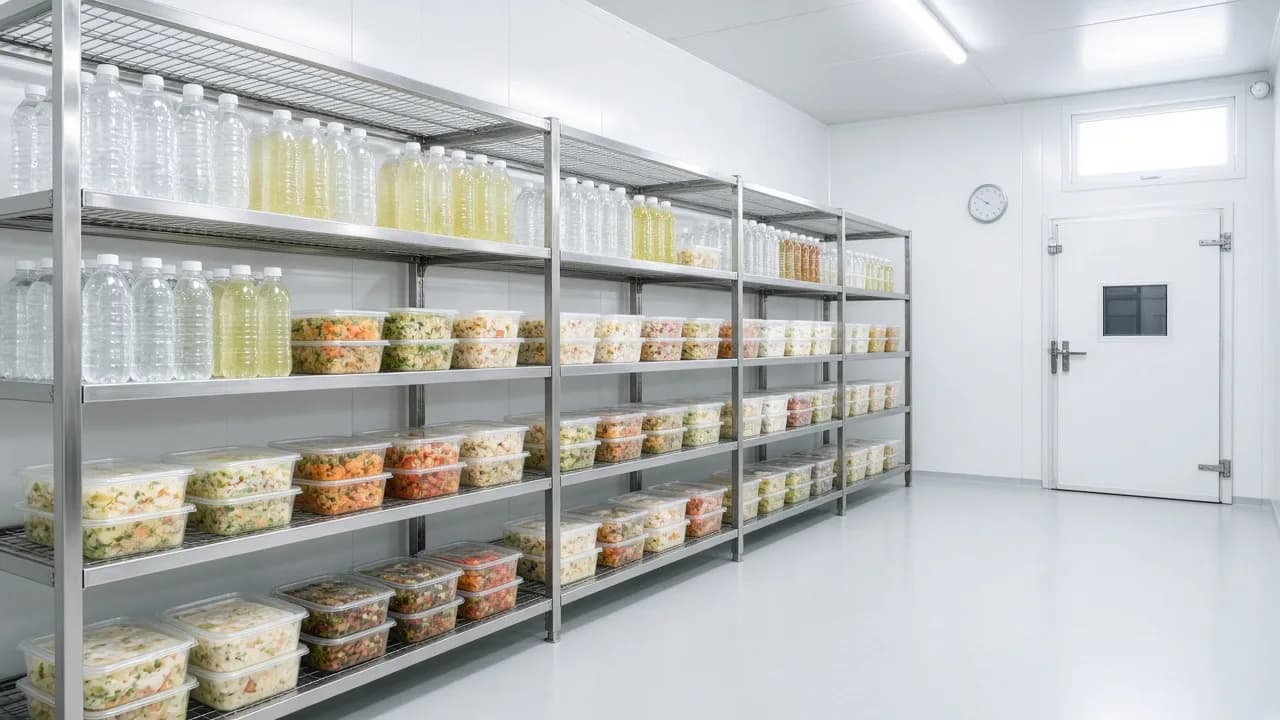
Food processing applications can require controlled cooling during storage or specific stages of the production process. Refrigeration requirements depend on the product, process temperature, load, and operating cycle.
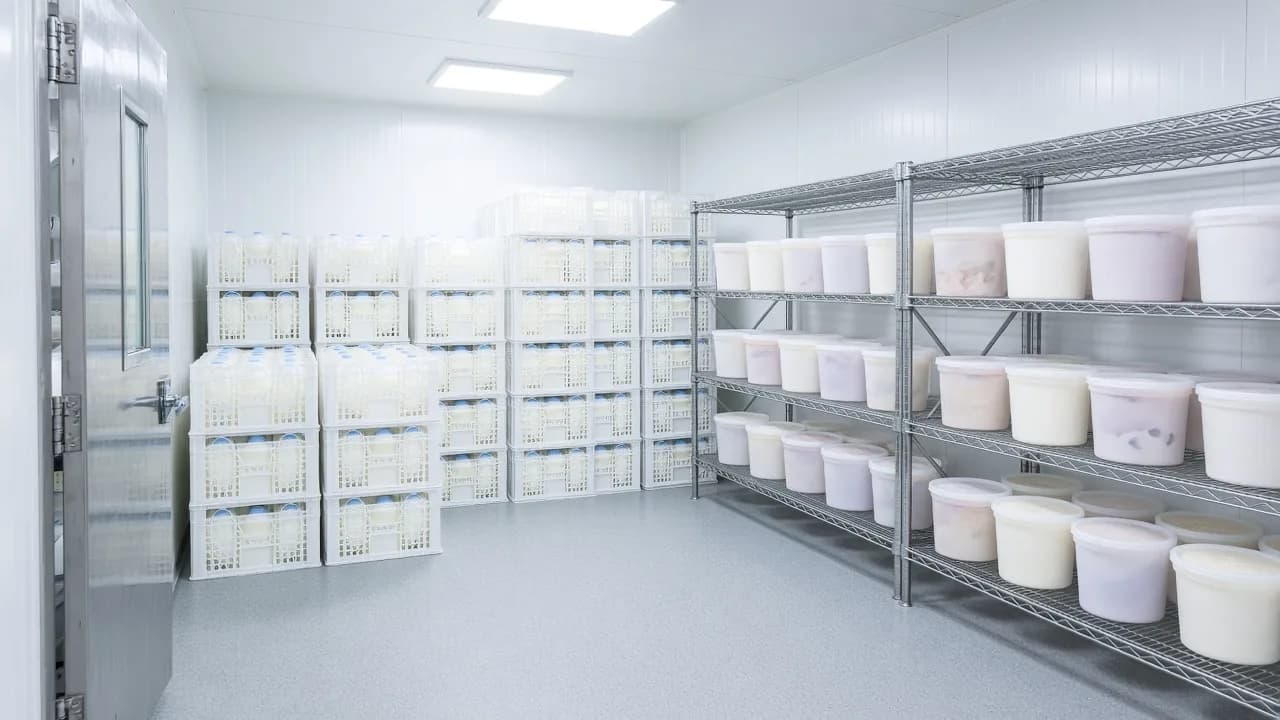
Dairy facilities can require chilled refrigeration for milk, dairy products, processing areas, and temperature controlled storage. The system configuration depends on the product and process requirements.
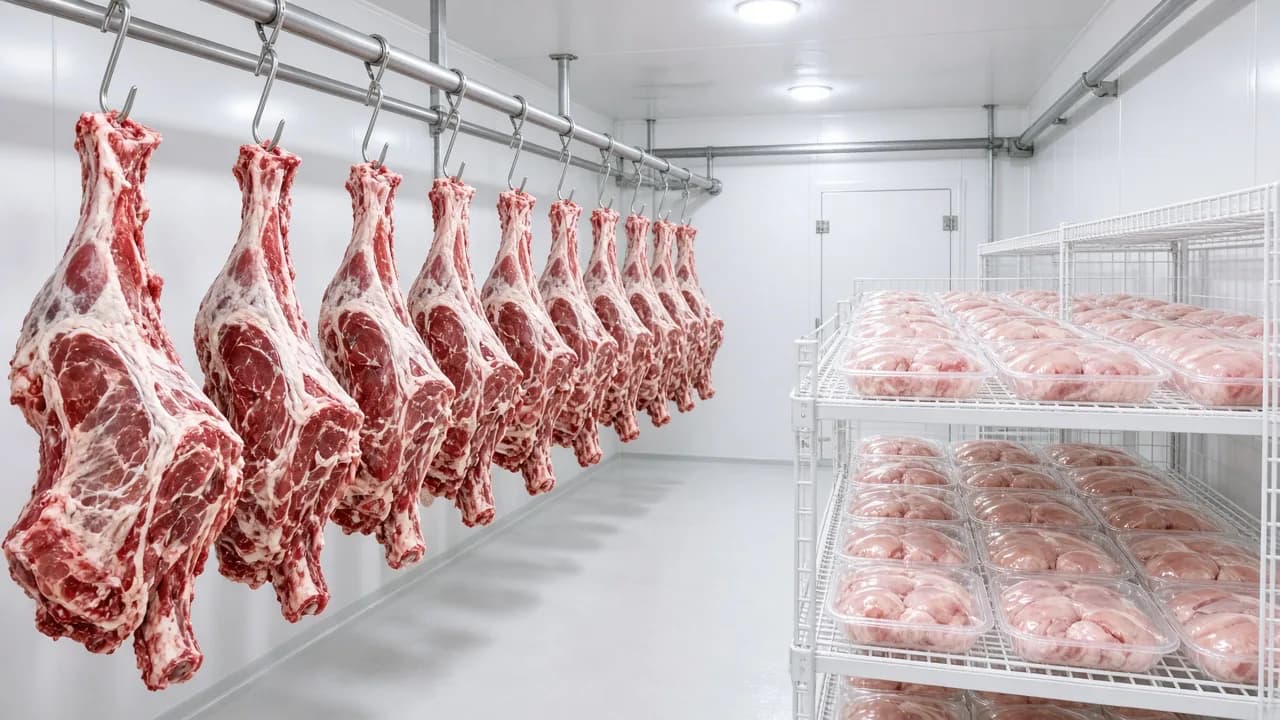
Refrigeration for meat and poultry applications is selected according to whether products are fresh or frozen, their incoming temperature, daily movement, storage conditions, and required room temperature.
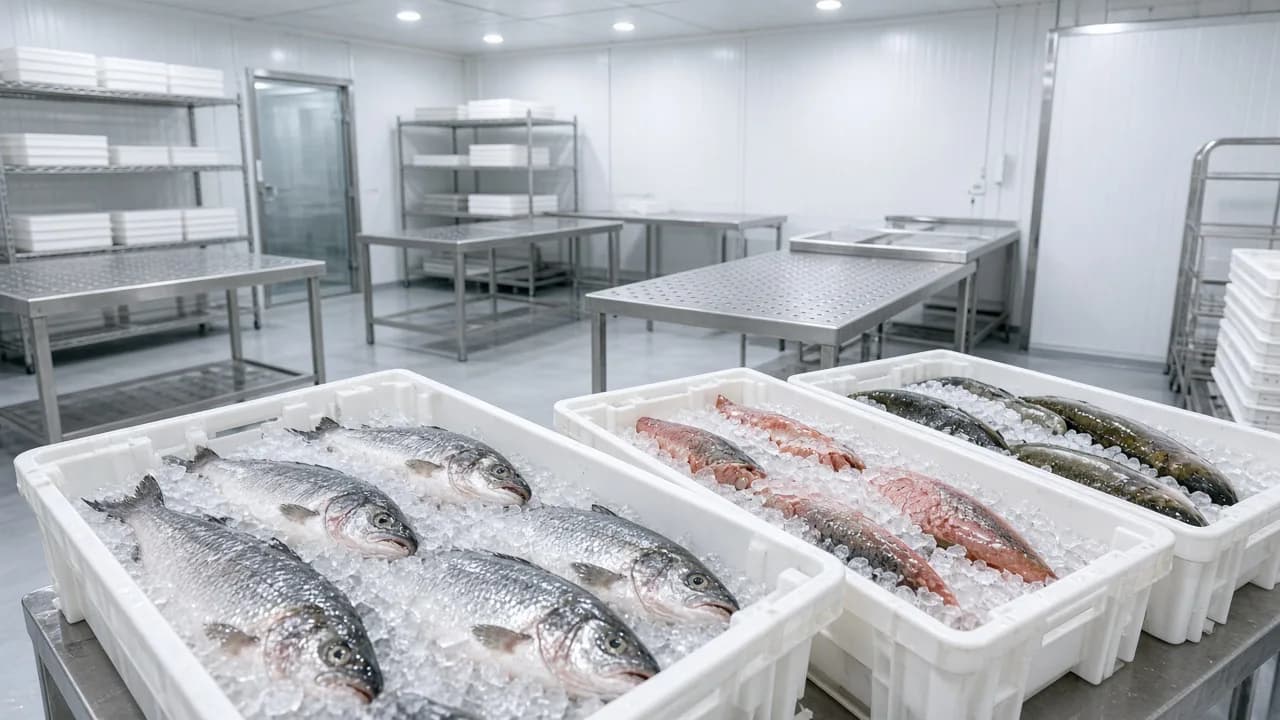
Seafood refrigeration requirements vary between fresh, chilled, and frozen products. The system is designed around the required temperature, product load, humidity, handling process, and storage conditions.
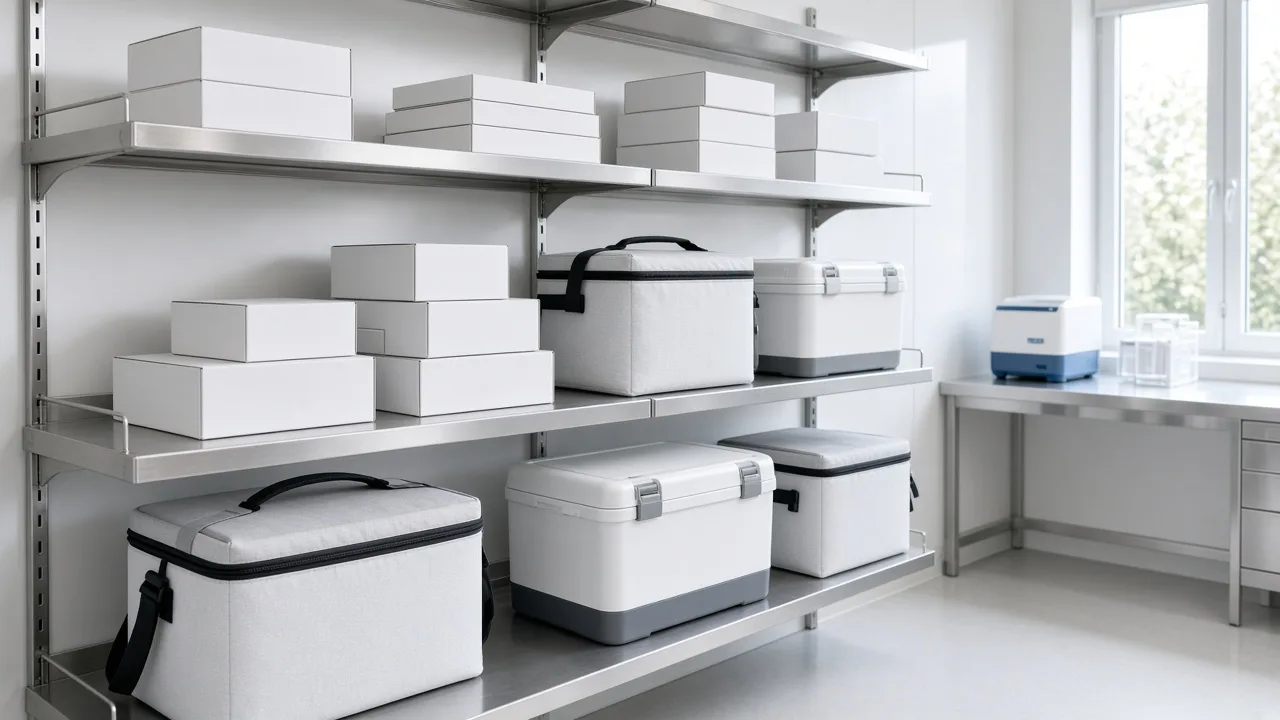
Pharmaceutical facilities can require closely controlled temperature environments, including commonly used 2°C to 8°C conditions. The final refrigeration configuration depends on the product and applicable storage requirements.
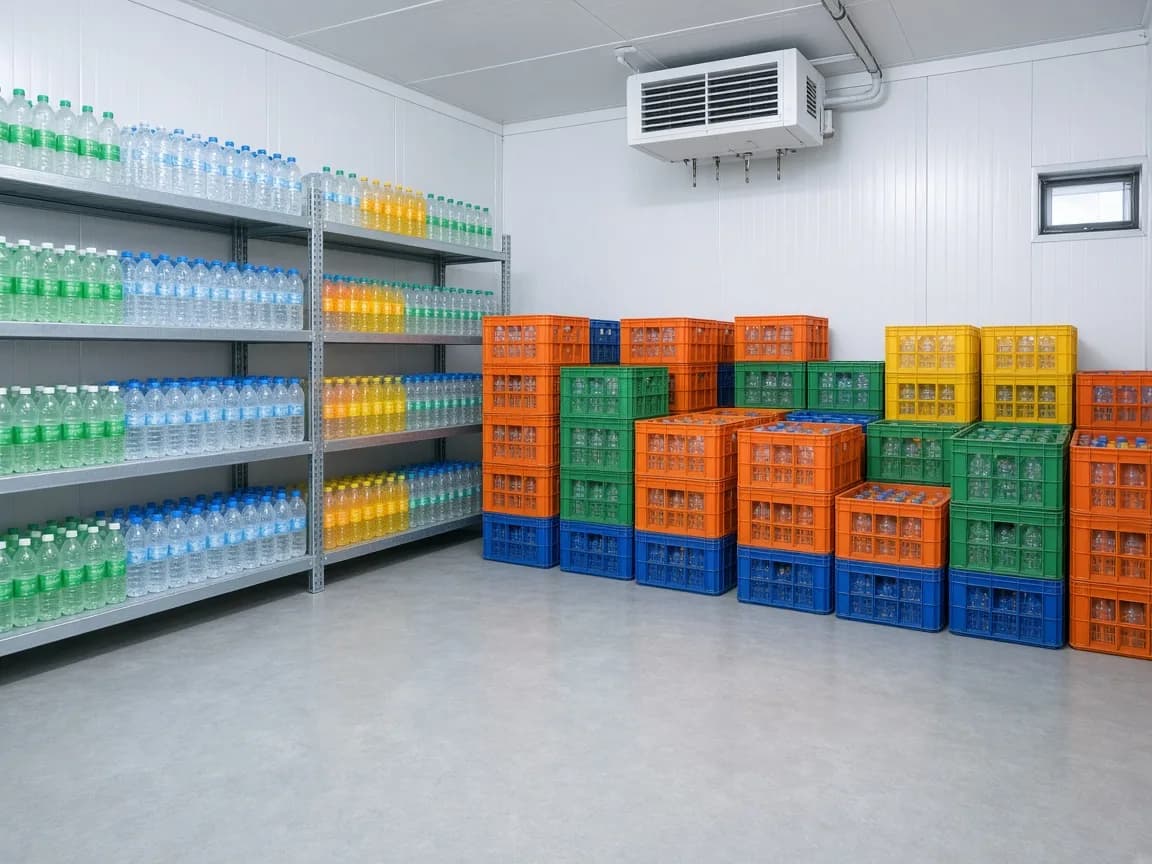
Beverage operations can require controlled cooling or temperature controlled storage depending on the product and process. Heat load and operating conditions determine the refrigeration duty.
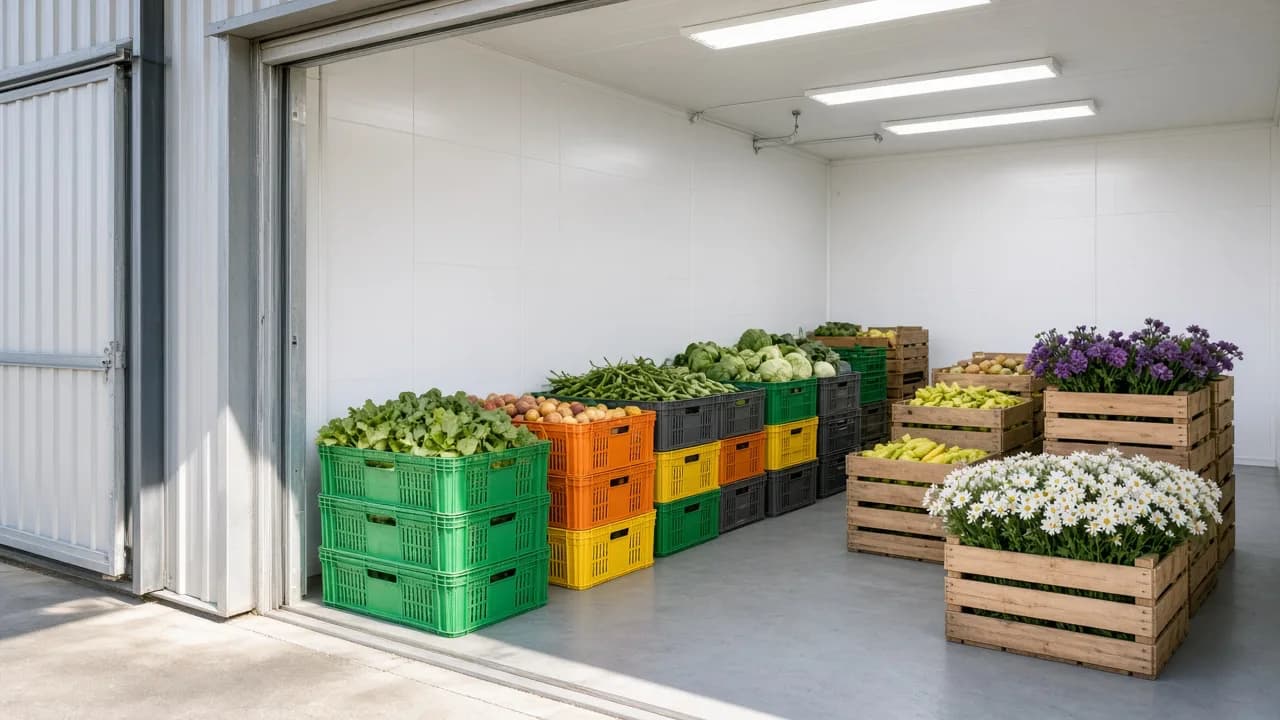
Agricultural products can require product specific temperature and humidity conditions during storage. Refrigeration design considers the product, incoming temperature, storage quantity, and daily movement.
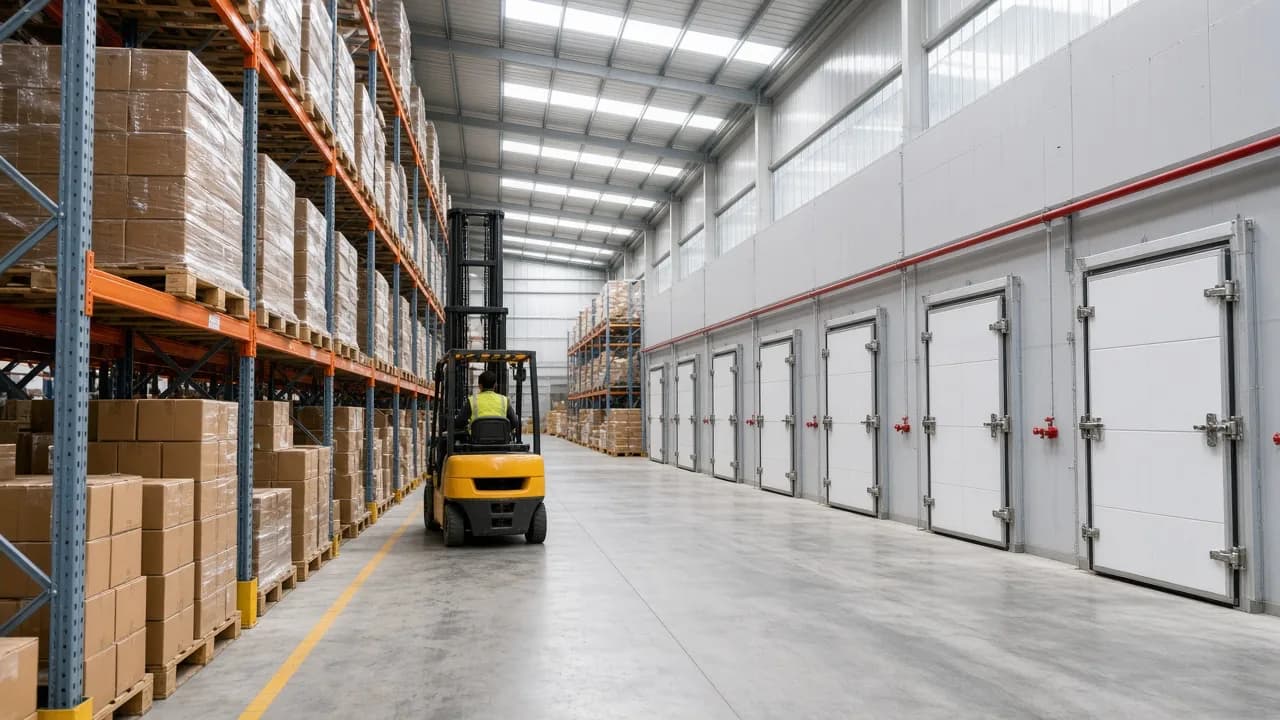
Distribution facilities can require chilled, frozen, or multi temperature storage areas to maintain product conditions during receiving, storage, and dispatch.
Industrial processes can require refrigeration to maintain a defined process temperature or remove heat from equipment or materials. The refrigeration configuration is developed from the process load and operating cycle.
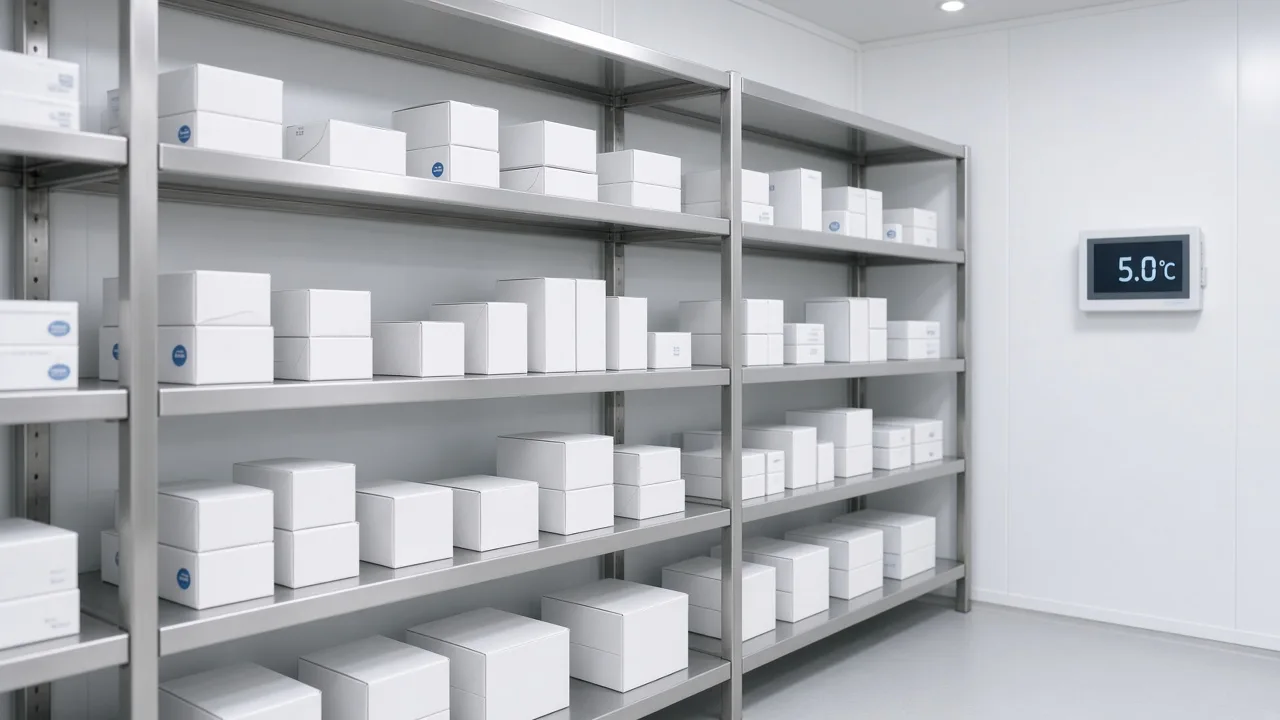
Vaccines are commonly designed around 2°C to 8°C storage conditions, subject to the specific vaccine requirements.

Seed storage requirements vary by seed type and can require controlled temperature and humidity conditions.
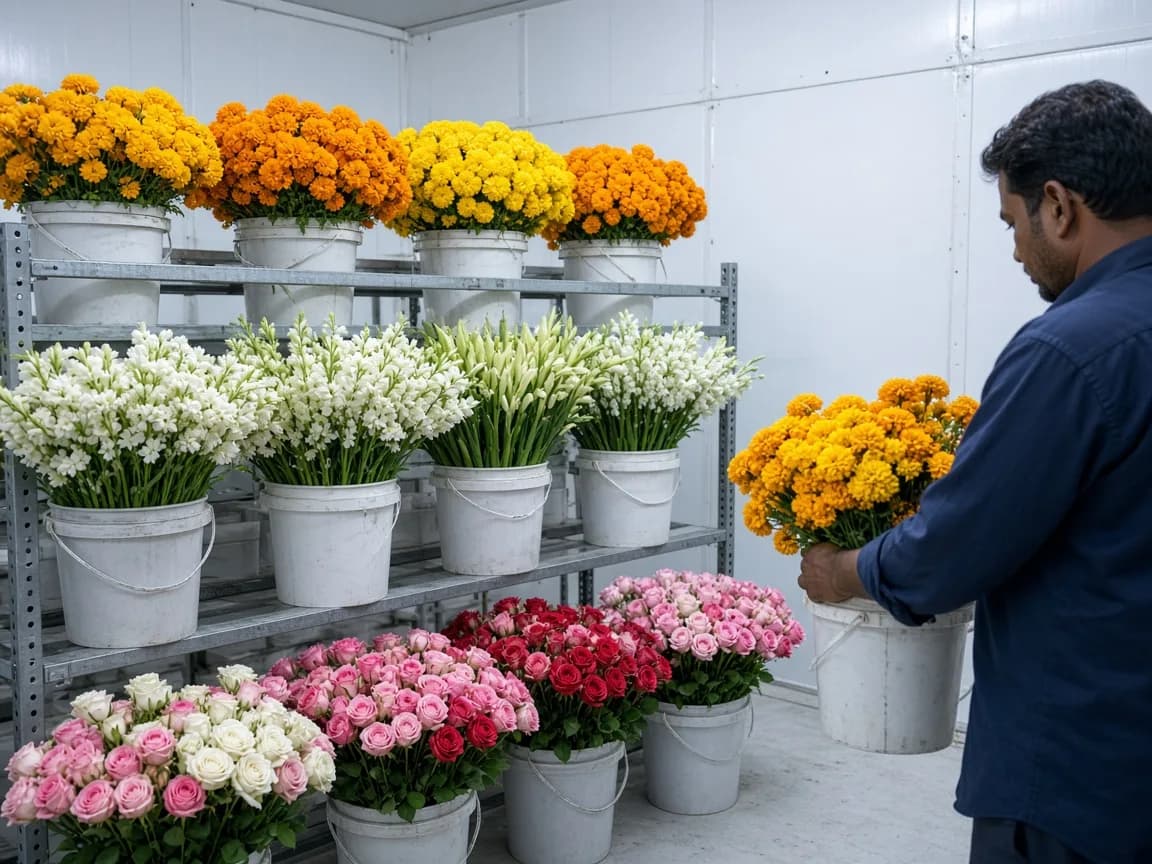
Flowers are typically stored around 1°C to 5°C, although the required condition depends on the variety, handling process, and storage duration.
Temperature duty
The required temperature is one of the primary inputs used to establish refrigeration capacity, equipment selection, insulation, airflow, controls, and operating conditions.
+2°C to +8°C
Medicines and vaccines are commonly designed around 2°C to 8°C, while selected chilled products can require a similar condition. The exact range is confirmed from the product specification.
Actual temperature and humidity requirements depend on the stored product, process, and operational conditions.
Equipment
A refrigeration plant depends on multiple components working together to deliver the required cooling duty. Uniref selects these components according to the calculated load, operating temperature, refrigerant, ambient conditions, and site utilities.
Compressors provide the refrigeration system's primary compression stage and are selected according to the refrigeration duty, operating temperature, refrigerant, and project requirements.
Condensing units are selected according to the required refrigeration capacity, heat rejection conditions, refrigerant configuration, and operating environment.
Evaporators transfer heat from the room or process environment into the refrigeration system and are selected according to temperature, cooling duty, airflow, and application.
Refrigeration controls coordinate equipment operation and provide the control functions required for temperature management and system protection.
Temperature controllers maintain the defined operating range and provide control inputs for refrigeration operation.
Sensors provide temperature and selected operating information required by the control and monitoring system.
Defrost systems are selected according to the evaporator configuration, operating temperature, humidity, and expected frost formation.
Electrical controls manage refrigeration equipment and associated systems according to the engineered configuration.
Connected system
Industrial refrigeration equipment performs as a connected system rather than as a collection of independent components. Uniref coordinates refrigeration equipment, cold rooms or process interfaces, electrical controls, sensors, monitoring, and installation around the calculated refrigeration duty.
The refrigeration plant is configured according to the required cooling duty, temperature, refrigerant, ambient conditions, and site utilities.
The refrigeration system is connected to the room or industrial process it is designed to serve, with the required temperature and operating conditions established during engineering.
Compressors and condensing units are matched to the refrigeration load and operating conditions established during system design.
Evaporators are selected and positioned according to the room or process conditions, cooling duty, airflow, and required temperature.
Controls coordinate refrigeration equipment operation and support temperature management, protection, and monitoring.
Monitoring provisions can provide temperature information, alarms, data logging, and selected equipment status according to the operational requirement.
Equipment and connected systems are installed according to the approved engineering design and site conditions.
The completed refrigeration system is tested and commissioned to verify operation and establish the required working conditions.
Heat load
Refrigeration capacity cannot be determined from room size or facility area alone. Uniref evaluates the product or process, required temperature, incoming load, ambient conditions, room operation, equipment, and site utilities before establishing the refrigeration duty.
The quantity and temperature of incoming product can significantly influence the refrigeration requirement. Product characteristics and daily movement are considered during heat load calculation.
Room dimensions, insulation, ambient conditions, doors, lighting, equipment, and other heat sources are considered when calculating heat entering the refrigerated space.
Door openings and traffic can introduce warm air into a refrigerated room. The frequency and duration of openings are considered when establishing the refrigeration load.
Required temperature, humidity, operating hours, loading pattern, and expected usage are considered to establish the actual refrigeration duty.
Local Indian climate and seasonal ambient conditions influence heat rejection requirements and refrigeration equipment selection.
Available electrical supply, water availability where applicable, and other site utilities are reviewed before finalizing the refrigeration configuration.
The calculated refrigeration duty provides the basis for selecting compressors, condensing units, evaporators, controls, and associated equipment.
Project delivery
A refrigeration project requires coordination between engineering, equipment selection, manufacturing or supply, installation, testing, and commissioning. Uniref can manage these stages as a connected project scope based on the refrigeration requirements established during engineering.
01
The product or process, temperature requirement, refrigeration load, operating cycle, and site requirements are reviewed before design begins.
02
The site is assessed for available space, access, ambient conditions, power, water where applicable, and other utilities required for the selected refrigeration configuration.
03
Heat load calculation establishes the cooling duty from product load, room or process conditions, ambient heat gain, infiltration, equipment, and operating requirements.
04
The refrigeration system is designed around the calculated duty, required temperature, refrigerant configuration, equipment arrangement, controls, and site conditions.
05
Compressors, condensing units, evaporators, controls, sensors, and associated components are selected according to the engineered requirements.
06
Specified equipment and associated components are manufactured or sourced and supplied according to the approved project scope.
07
Refrigeration equipment, electrical controls, sensors, monitoring systems, piping, and associated components are installed according to the project design.
08
The installed equipment and connected systems are tested to verify correct operation and identify issues before commissioning.
09
The refrigeration system is commissioned to establish the required operating conditions and verify system performance.
10
Relevant operating information and training are provided to the facility team before handover.
11
Maintenance, inspections, breakdown support, spare parts, repairs, and other service requirements can be addressed after commissioning.
Engineering inputs
The right refrigeration system starts with accurate information about the product, process, facility, and operating conditions. Providing these details early helps the engineering team establish the refrigeration duty and equipment requirements.
What needs to be cooled?
The product or process determines the required temperature, cooling method, heat load, and operating conditions.
What is the required temperature?
The target temperature establishes an important part of the refrigeration duty and equipment selection.
What is the incoming product temperature?
The temperature of incoming product affects the amount of heat that must be removed by the refrigeration system.
How much product enters per day?
Daily product movement affects the cooling load and helps establish the required refrigeration capacity.
What is the room or process area size?
Dimensions help establish the refrigerated volume, heat gain, equipment arrangement, and airflow requirements.
How frequently are doors opened?
Door traffic can increase air infiltration and therefore contribute to the refrigeration heat load.
What insulation is available or planned?
Insulation affects heat transfer into the refrigerated space and forms part of the overall refrigeration design.
What is the local ambient condition?
Ambient temperature affects heat rejection and the selection of refrigeration equipment.
What power is available?
Electrical supply influences equipment selection, controls, and the overall plant configuration.
Is water available where required?
Water availability is considered when evaluating water cooled refrigeration configurations.
Operating efficiency
Refrigeration efficiency depends on the interaction between the refrigeration plant, room construction, equipment selection, airflow, controls, and operating conditions. Uniref considers these factors during engineering without promising a fixed savings percentage.
Compressors are selected according to the calculated refrigeration duty, operating temperature, refrigerant, and expected load conditions.
Evaporator selection considers cooling duty, room or process temperature, airflow, humidity, and application requirements.
Condensing equipment is selected according to ambient conditions, heat rejection requirements, refrigerant configuration, and site utilities.
Insulation, room construction, doors, joints, and other thermal boundaries are considered to reduce unnecessary heat transfer.
Airflow is planned according to the evaporator configuration, room or process requirements, product conditions, and required temperature distribution.
Defrost operation is planned according to evaporator type, temperature, humidity, frost conditions, and actual operating requirements.
Automated controls can coordinate refrigeration equipment operation according to the required temperature and operating conditions.
Temperature monitoring helps operators identify changes in the refrigerated environment and respond when conditions move outside the defined range.
Equipment status monitoring can provide visibility into selected refrigeration components and operating conditions.
Planned maintenance helps keep refrigeration equipment operating under the conditions for which it was designed and can identify service requirements before larger issues develop.
Monitoring
Monitoring helps operators understand temperature conditions, equipment status, and selected refrigeration parameters during operation. The monitoring configuration can be developed around the facility layout, number of refrigerated areas, required parameters, alarm conditions, and operating workflow.
Example operator view
Illustration only
Chiller 1
4.1°C
Set band 2–8°C
Humidity
78% RH
Plant
Running
Sample figures shown here are illustrative. A live monitoring panel shows the rooms and operating information from that specific project.
Digital temperature monitoring provides current temperature information from selected rooms or process areas for operational review.
Humidity monitoring can be included where relative humidity affects the product, process, or required storage environment.
Temperature alerts can notify operators when configured limits are exceeded or when a refrigerated area moves outside its defined operating range.
Alarm systems can be configured for selected temperature, equipment, or system conditions that require operator attention.
Data logging records selected operating parameters for review, analysis, and applicable operational records.
Remote monitoring can provide access to selected refrigeration information without requiring operators to remain beside the equipment or refrigerated area.
Equipment status information can help operators identify the operating condition of selected compressors, condensing units, evaporators, and controls.
Centralized control can bring selected temperature, equipment, and system information together for easier observation across the facility.
IoT integration can be considered when the operation requires additional connectivity, remote access, or integration with an existing monitoring environment.
After sales
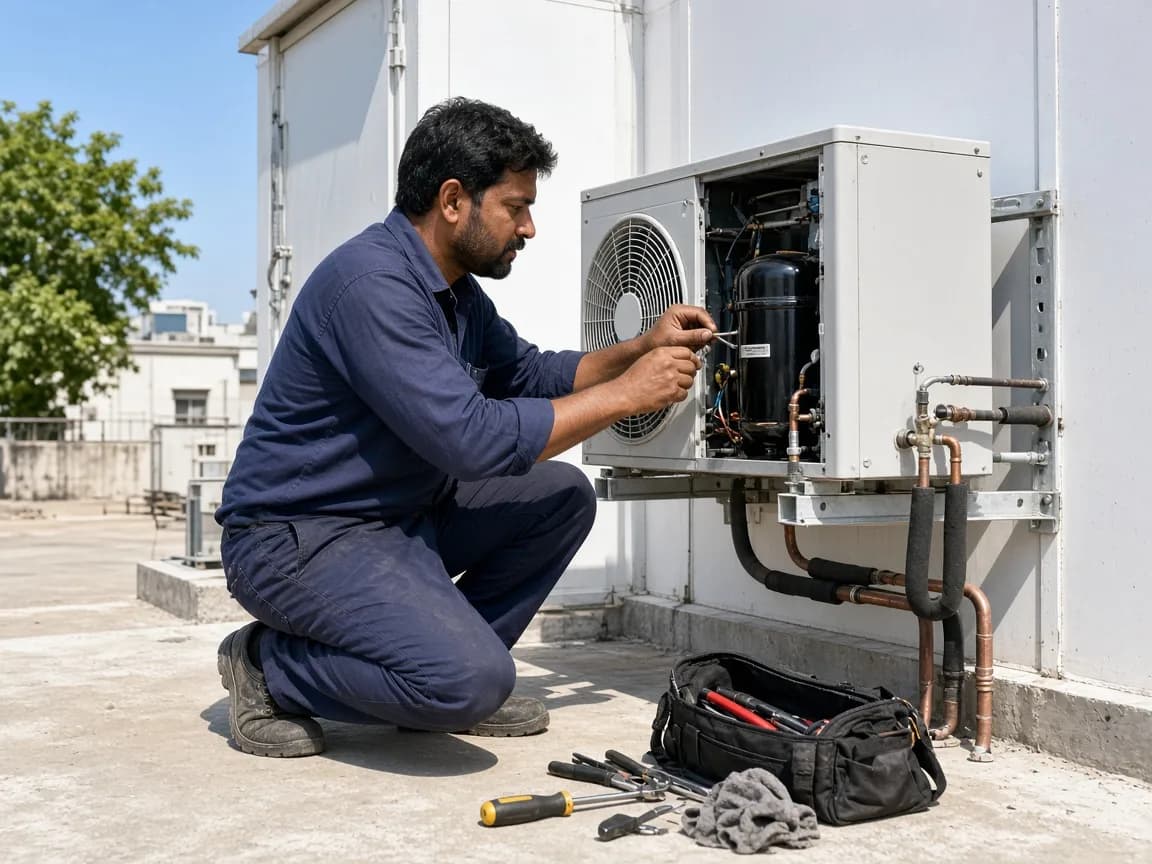
Industrial refrigeration equipment requires ongoing attention after commissioning to maintain operating condition and address service requirements. Uniref can support refrigeration systems through maintenance, inspections, breakdown assistance, spare parts, repairs, and selected upgrades.
Scheduled maintenance helps identify equipment conditions that may require attention before they develop into larger operational issues.
Annual maintenance arrangements can provide planned service coverage according to the installed refrigeration equipment, facility operation, and agreed scope.
Breakdown support addresses refrigeration, electrical, controls, and associated equipment issues that affect system operation.
Replacement parts can be addressed according to the installed equipment, refrigeration configuration, and system requirements.
System inspections can review compressors, condensing units, evaporators, controls, electrical components, sensors, and other connected equipment.
Operating conditions and equipment performance can be reviewed to identify adjustments or improvements appropriate to the installed system.
Repair support can address issues involving compressors, condensing units, evaporators, controls, electrical systems, and associated refrigeration components.
Existing refrigeration systems can be assessed for selected upgrades or retrofits when operating requirements, equipment condition, or process requirements change.
Why Uniref
Uniref combines refrigeration engineering, equipment supply, installation, commissioning, and after sales support within a coordinated project scope. The system is developed around the actual refrigeration duty, operating temperature, site conditions, and process requirements.
Engineering led approach
The refrigeration system is developed from the product or process, required temperature, heat load, operating cycle, and site conditions.
Compressors, condensing units, evaporators, controls, and associated components are selected according to the calculated refrigeration duty.
Coordinated delivery
The scope can cover requirement analysis, site assessment, heat load calculation, refrigeration design, equipment selection, supply, installation, testing, commissioning, training, and handover.
Manufacturing support is available in Bengaluru and Mumbai as part of the company's project capabilities.
Support after installation
Project and service support can be coordinated across India through the offices in Jaipur, Chennai, Delhi and Indore, and through the service locations.
Maintenance, inspections, breakdown support, spare parts, repairs, and other service requirements can be addressed after commissioning.
Quality and safety
Uniref has quality documents on file covering cold rooms, heat exchangers, condensing units, and their parts, including ISO 9001:2015, certificate QMS/23M0934, GMP, certificate GMP/23M0935, and CE compliance with the Machinery Directive 2006/42/EC, certificate CE/23M0936. These documents were first registered on 7 April 2023, with recertification due on 6 April 2026, so buyers should ask Uniref for the current documents applicable to their project.

Quality management system. Certificate QMS/23M0934. Scope: design, manufacturing and trading of cold rooms, heat exchangers, condensing units and their parts.

Good manufacturing practices. Certificate GMP/23M0935. Same product scope as the quality system certificate.

Certificate of compliance CE/23M0936 with the Machinery Directive 2006/42/EC for cold rooms, heat exchangers, condensing units and their parts.
Materials and components are selected according to the application, stored product, operating environment, and relevant hygiene requirements.
Insulation and refrigerated space construction are designed to maintain the required temperature conditions while limiting unwanted heat transfer.
Electrical controls and associated systems are selected and installed according to the refrigeration configuration and project requirements.
Refrigeration components are selected according to the required duty, temperature, refrigerant, operating conditions, and overall system configuration.
Where refrigeration serves temperature sensitive products, room construction and associated materials are planned with practical cleaning and product handling requirements in mind.
Safety controls and monitoring provisions are incorporated according to the refrigeration system, equipment configuration, and operating requirements.
FAQ
Industrial refrigeration solutions are engineered systems designed to remove and control heat for industrial storage, processing, or temperature sensitive applications. The configuration can include compressors, condensing units, evaporators, controls, sensors, monitoring, and associated equipment. The correct system depends on the required temperature, heat load, product or process, ambient conditions, site utilities, and operating cycle. Uniref develops the refrigeration configuration after these project factors are assessed rather than applying one standard system to every facility.
Project enquiry
Share the product or process, required temperature, approximate refrigeration load or capacity, project location, and operating requirements with our engineering team. These details help establish the initial refrigeration requirement and determine the appropriate next step for engineering.
Name and phone are required. Other fields can follow.