
Case study
Produce and Ripening Rooms
Many fruits and vegetables use temperatures around 0°C to 4°C, while products such as tomatoes, bananas, and avocados may require different controlled bands.
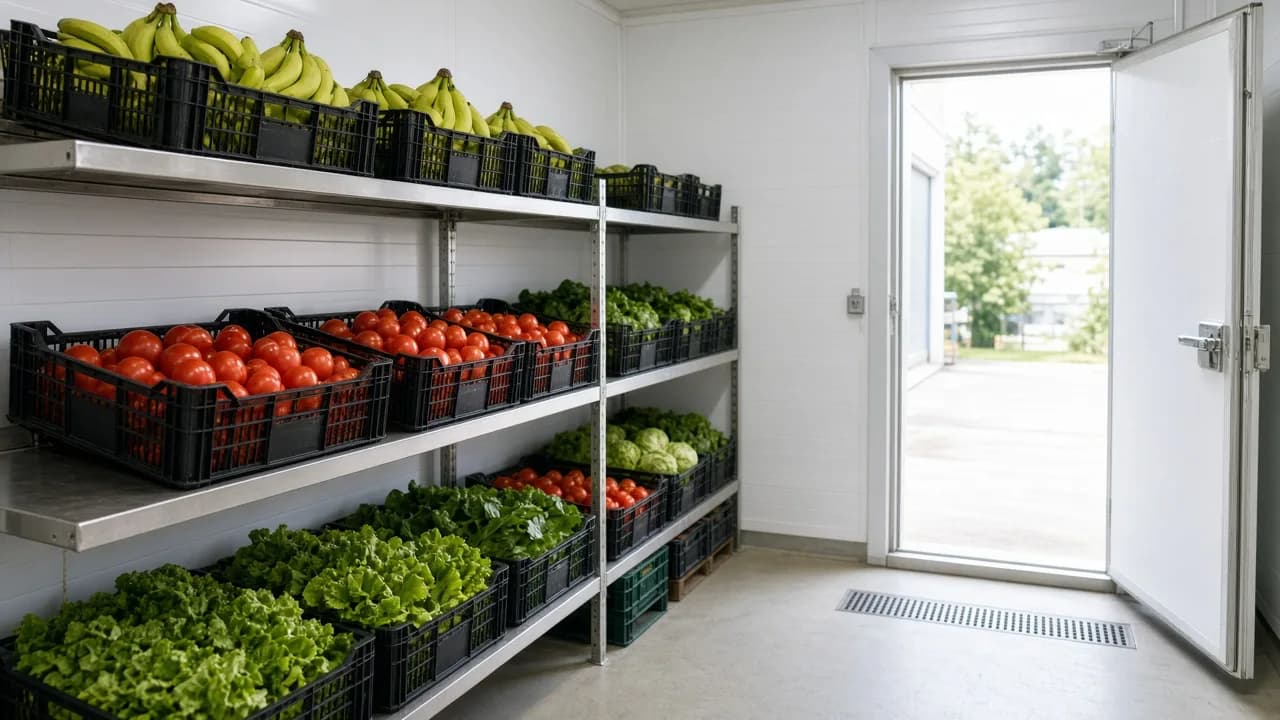
This is the application Uniref designs for. Temperature bands are typical design ranges. Room volume is confirmed during the site assessment.
The application
Fruit and vegetables do not share one storage condition. Some need a cold holding room, some need a ripening chamber, and some long-hold fruit is kept in controlled-atmosphere storage. Uniref designs the room for the crop, not as a general cold store with produce placed inside it.
Typical temperature
Apples, citrus, berries and many vegetables are held around 0°C to 4°C. Tomatoes are typically warmer, about 12°C to 15°C. Bananas and avocados in controlled ripening are typically about 12°C to 18°C. Flowers are a different band again, about 1°C to 5°C. The crop list decides which rooms are required.
What the design covers
Holding rooms are designed for even airflow and humidity control so the crop does not dry or sweat. Ripening chambers are a separate system, with temperature staged for the fruit being ripened. Controlled-atmosphere storage is specified only where the crop and the holding period call for it.
Confirmed on site
Crop mix, season, room volume and how produce moves from receiving to dispatch are confirmed during the site assessment. A single temperature is not applied to every fruit on the list.


