
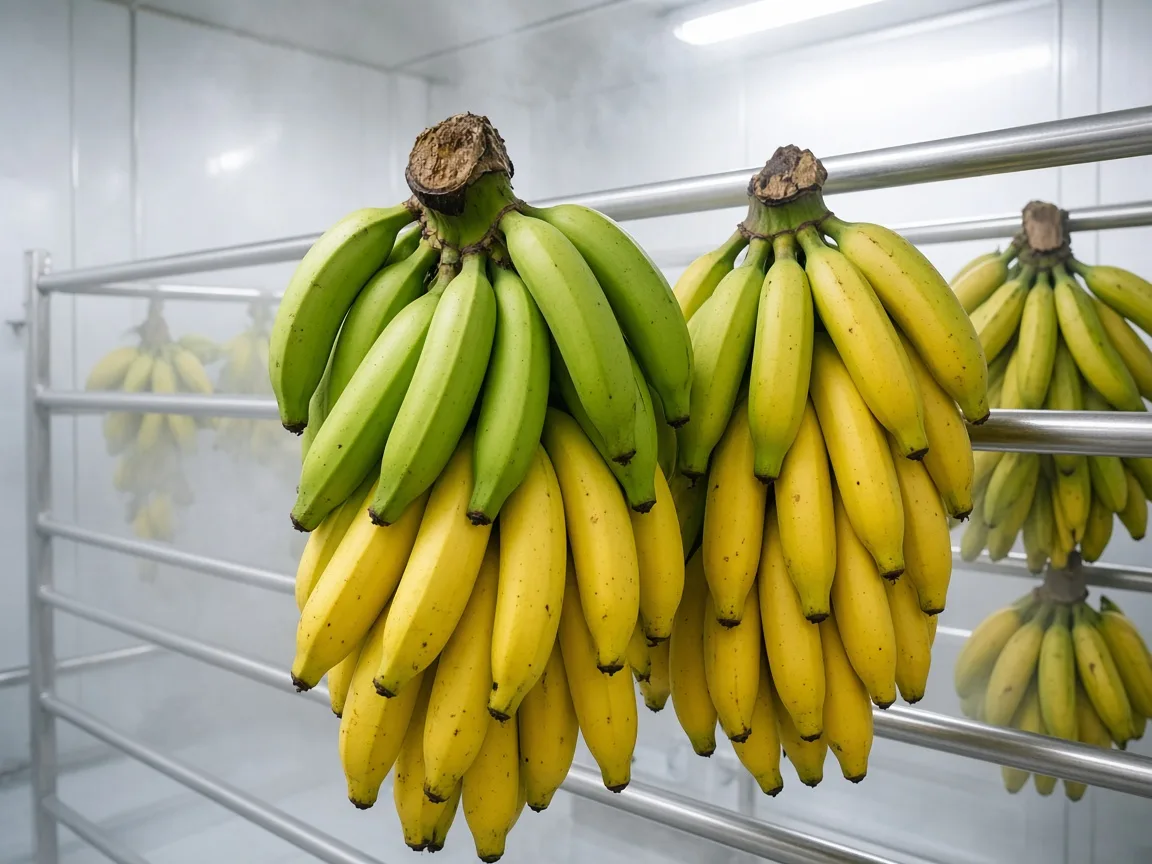
Banana Ripening Chambers
Banana ripening chambers can be designed around the fruit condition, loading arrangement, temperature, humidity, airflow, and required ripening process.
Engineered Ripening Chambers
Designed around your product
Uniref designs, supplies, installs, and commissions customized ripening chambers for temperature sensitive fruits and commercial applications across India. The chamber is engineered around the fruit, ripening requirement, loading pattern, temperature, humidity, airflow, chamber size, and site conditions.
Engineering coordination from Jaipur. Call +91 7222 001 000.
Temperature duty
Ripening
12°C to 18°C
Temperature, humidity, and airflow, set for the fruit and ripening cycle.
20+ years of experience, 2,500+ projects completed, offices in Jaipur, Chennai, Delhi and Indore, 40+ service locations, 4+ assembly facilities.
20+
Years of experience
2,500+
Projects completed
4
Offices in Jaipur, Chennai, Delhi and Indore
40+
Service locations
4+
Assembly facilities
Process
Ripening chambers provide a controlled environment where temperature, humidity, airflow, and ripening conditions can be managed according to the fruit and process. The chamber design must consider the product, loading quantity, packaging, incoming condition, required ripening condition, room dimensions, and operating process.
Bananas and avocados in controlled ripening are typically handled around 12°C to 18°C, although actual conditions depend on the product and ripening process. Other fruits can require different temperature and humidity conditions, so the chamber is designed according to the specific product requirement.
Engineering
A ripening chamber requires coordination between the insulated enclosure, refrigeration system, airflow, humidity management, controls, monitoring, and ripening process. Uniref assesses the fruit, incoming condition, loading arrangement, required temperature, humidity, chamber size, and site conditions before developing the system.
The project can include the chamber enclosure, refrigeration equipment, airflow arrangements, controls, sensors, monitoring, installation, testing, commissioning, and handover. The final configuration is established from the actual fruit and ripening requirements.
The chamber is designed around the fruit type, loading pattern, required temperature, humidity, airflow, and available facility space.
Refrigeration and controls are selected to maintain the temperature required by the fruit and ripening process.
Humidity conditions are considered according to the fruit, ripening process, storage duration, and operating environment.
Airflow is planned around the chamber dimensions, product arrangement, packaging, evaporator configuration, and ripening requirements.
Where the ripening process requires controlled gas application, the relevant provisions can be incorporated according to the product and process requirements.
Temperature, humidity, selected gas parameters, alarms, and equipment status can be monitored according to the operational requirement.
Chambers
Different fruits and ripening processes require different combinations of temperature, humidity, airflow, gas management, loading, and chamber conditions. Uniref develops ripening chamber systems according to the product, batch quantity, operating process, available space, and refrigeration requirements.
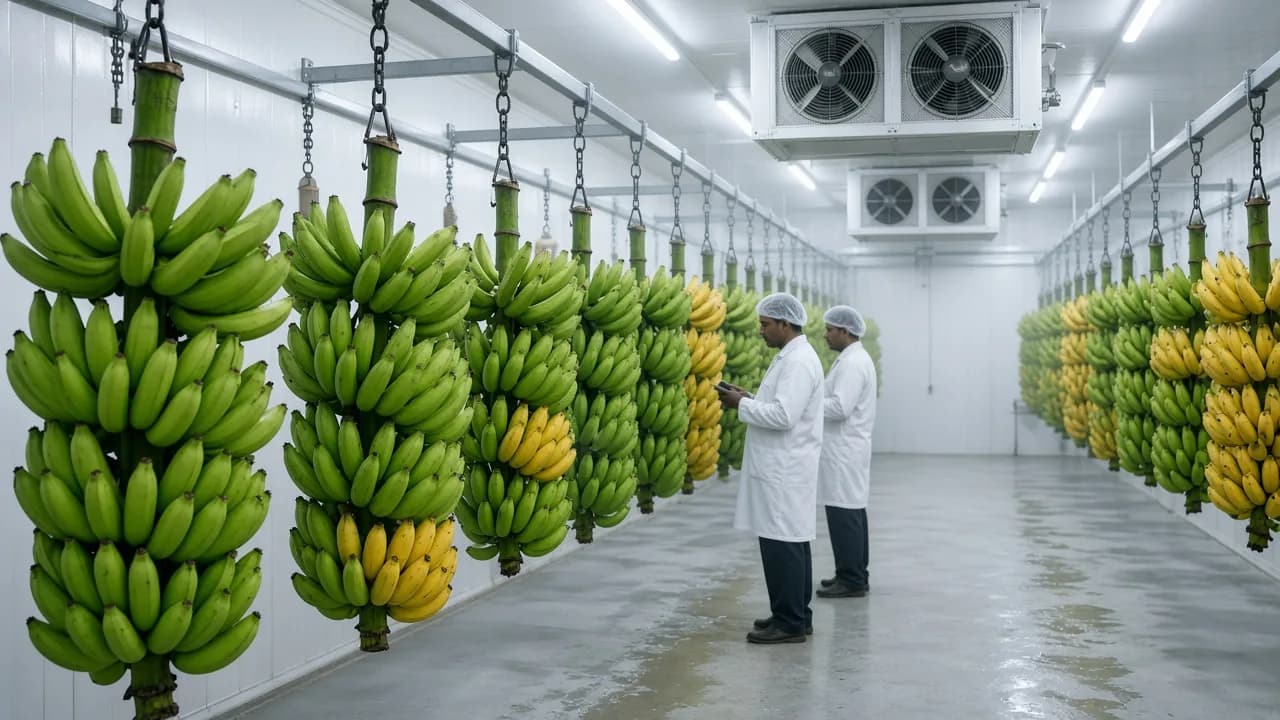
Banana ripening chambers can be designed around the fruit condition, loading arrangement, temperature, humidity, airflow, and required ripening process.
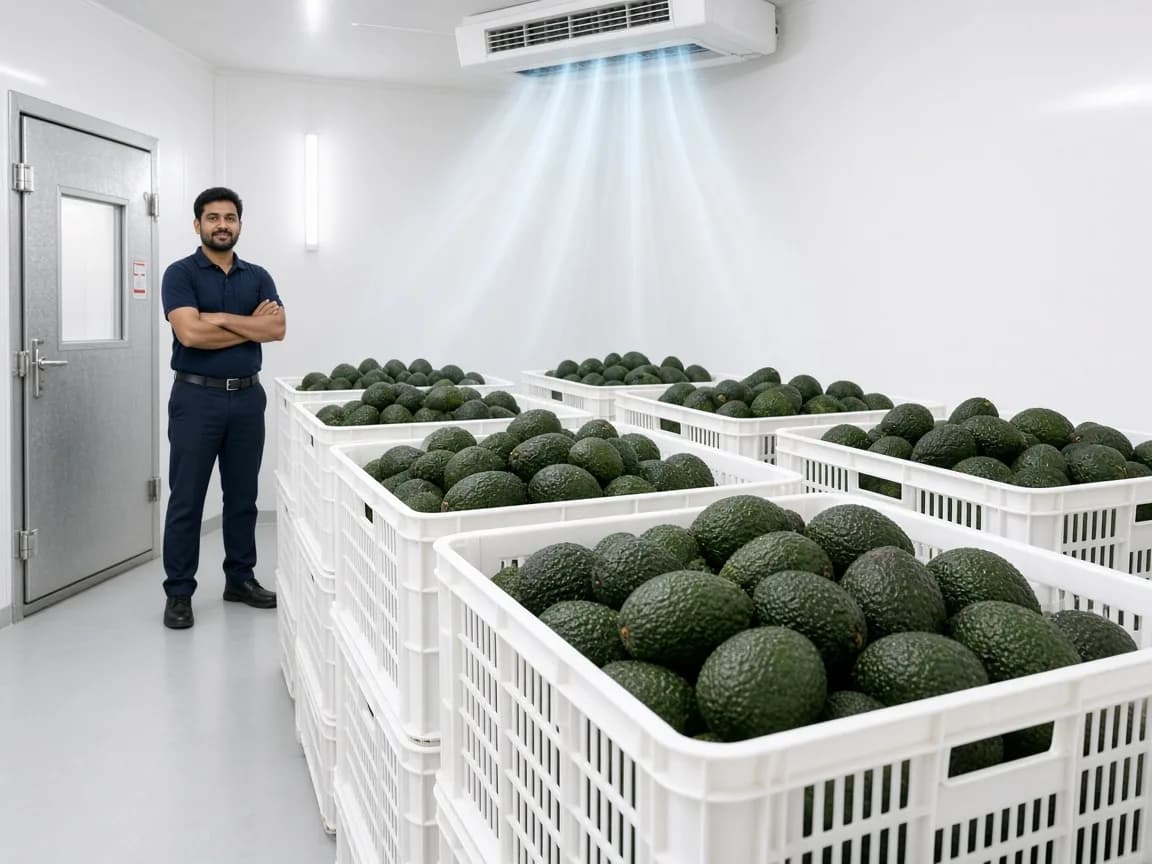
Avocado ripening chambers can be configured according to the product condition, ripening requirements, temperature, humidity, airflow, and chamber loading.
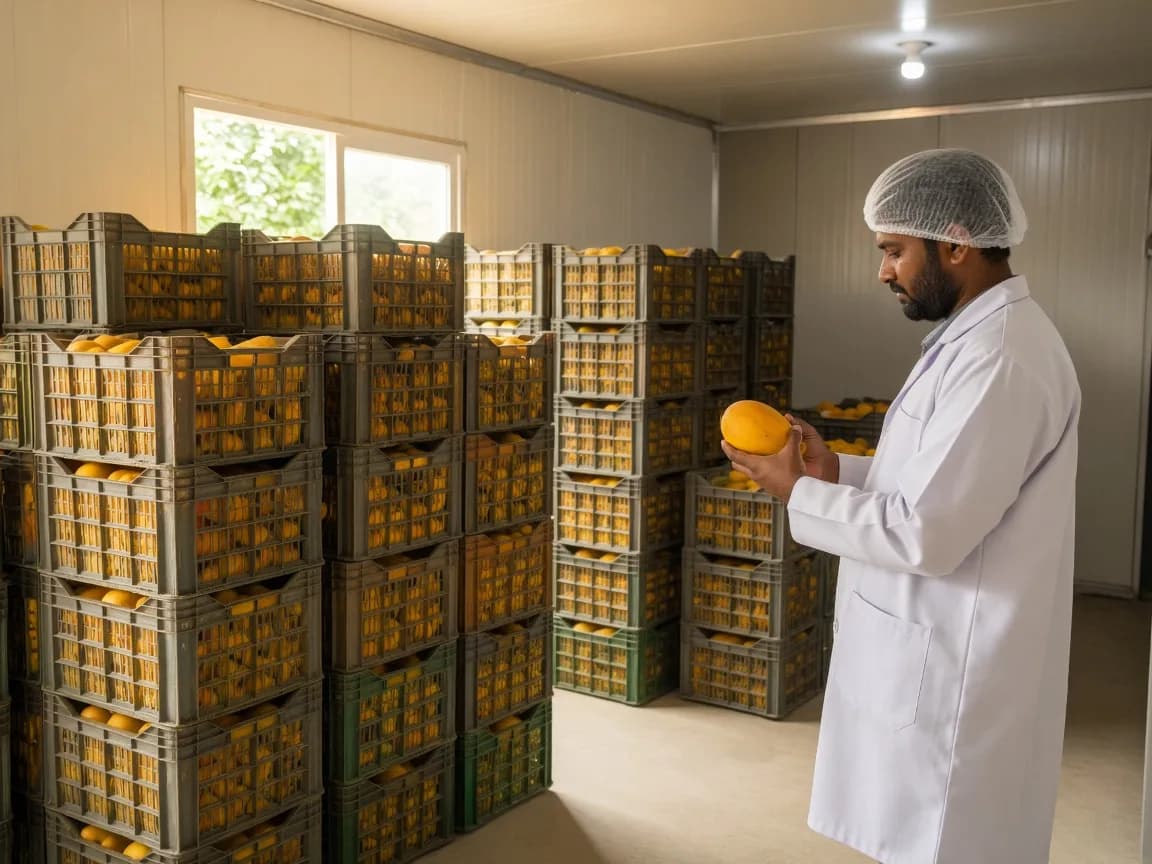
Fruit ripening chambers can be engineered for selected fruits where controlled temperature, humidity, airflow, and ripening conditions are required.
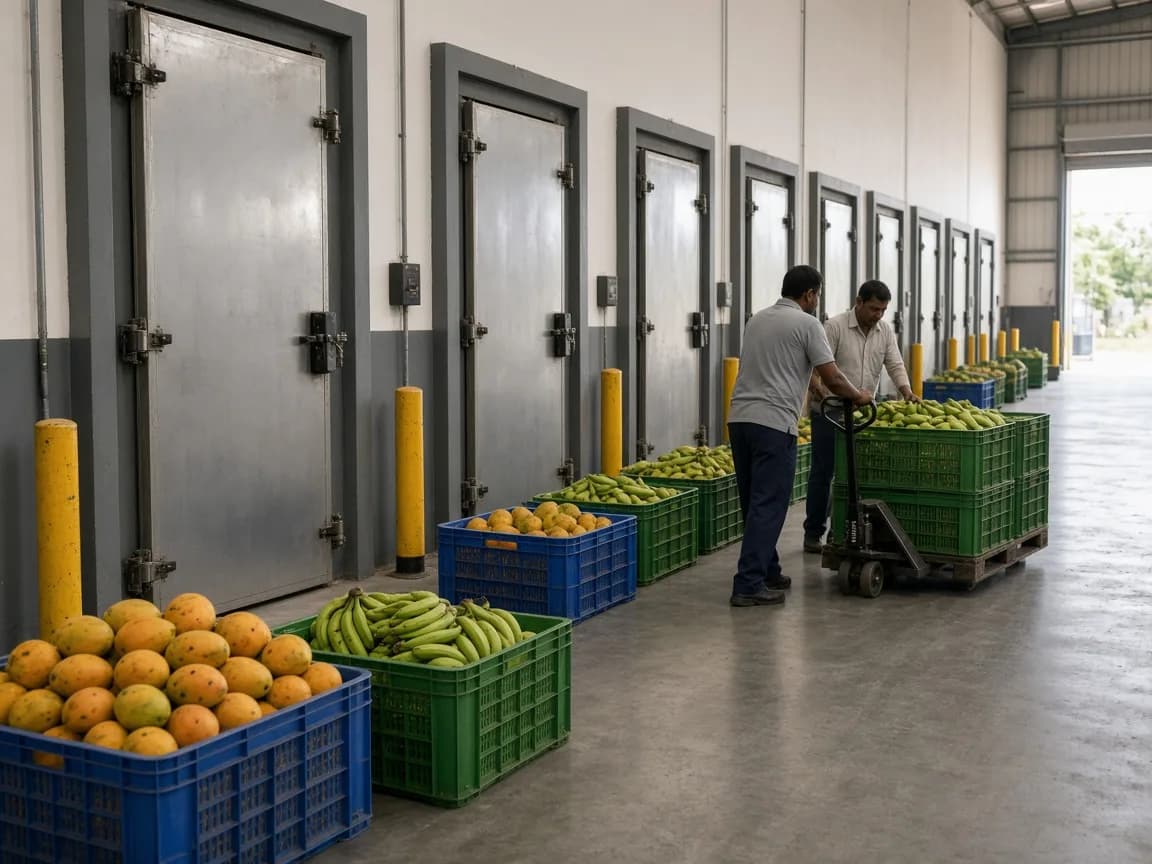
Multiple chambers can be configured where different batches or products require separate ripening cycles and operating conditions.
Commercial ripening chambers can be planned for distribution and handling operations where incoming fruit requires controlled ripening before dispatch.
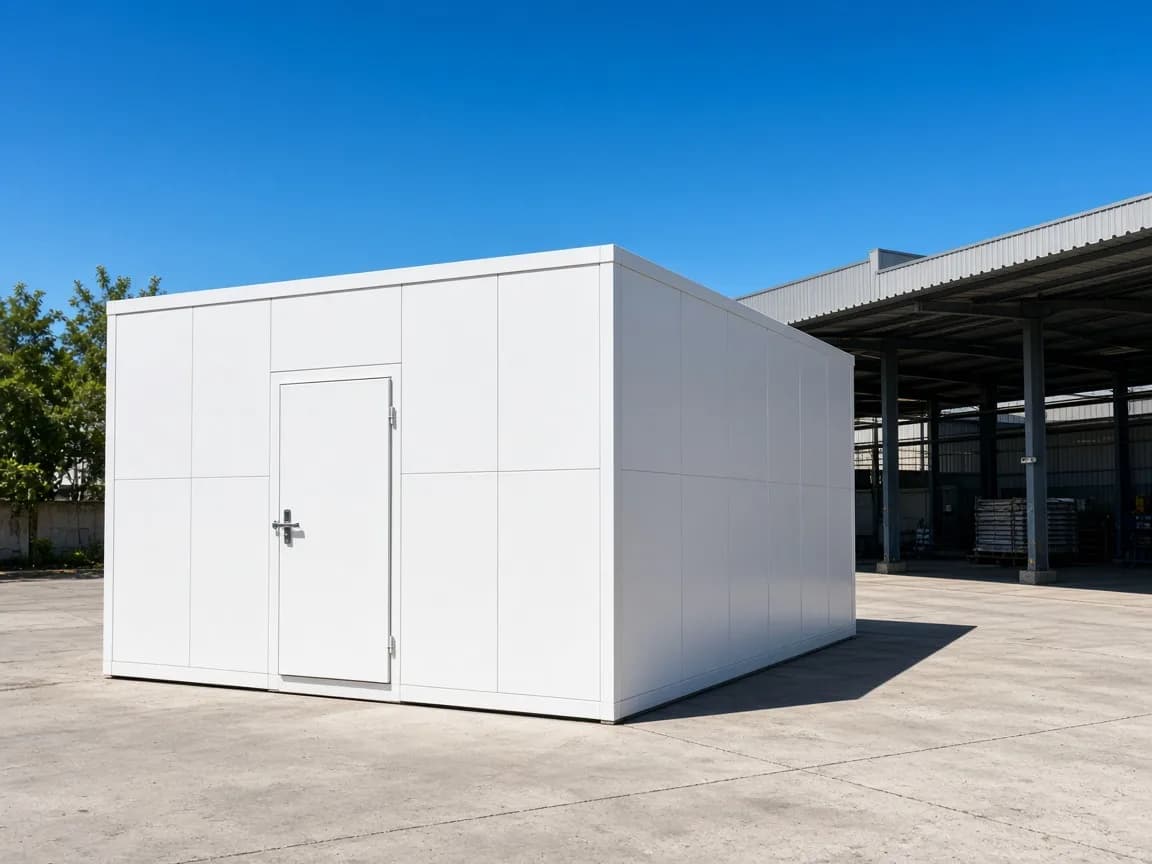
Modular chamber configurations can be considered where a defined insulated enclosure is required within the available facility space.
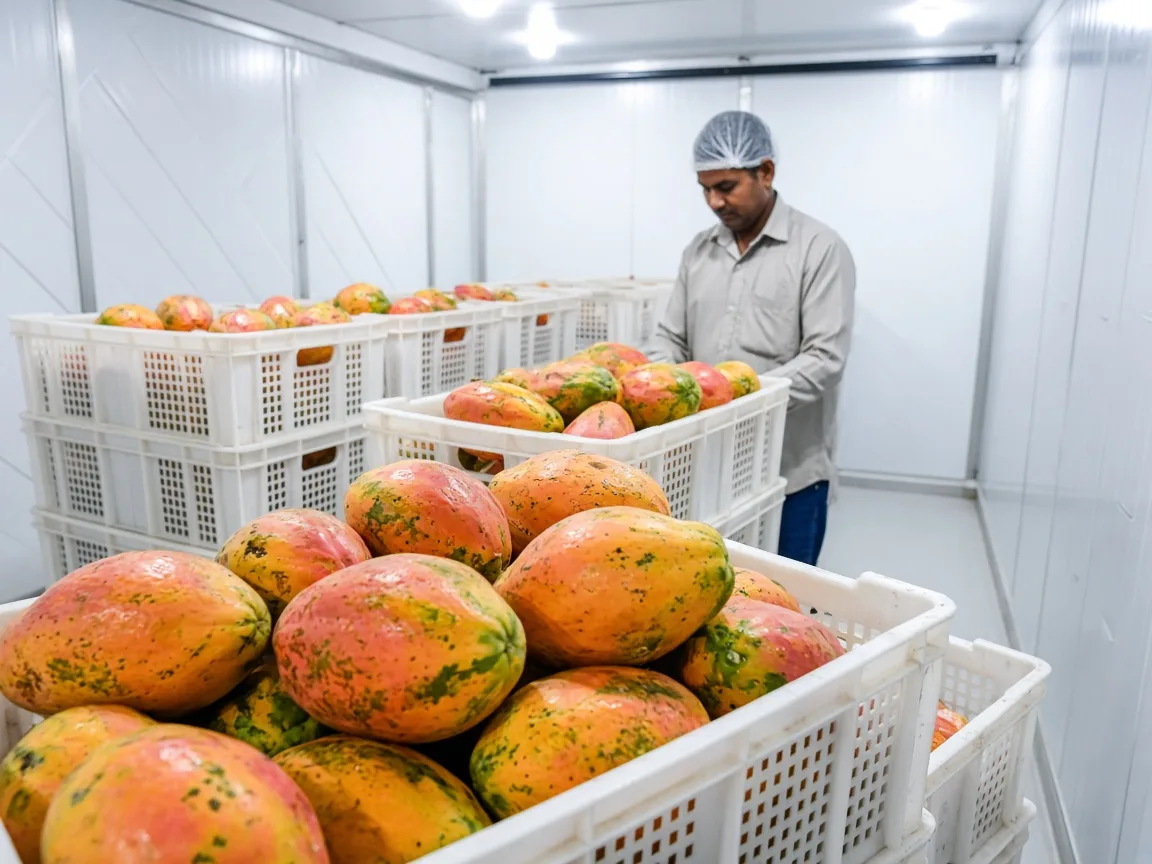
Controlled ripening rooms combine insulated construction, refrigeration, airflow, humidity management, controls, and monitoring according to the fruit and process.
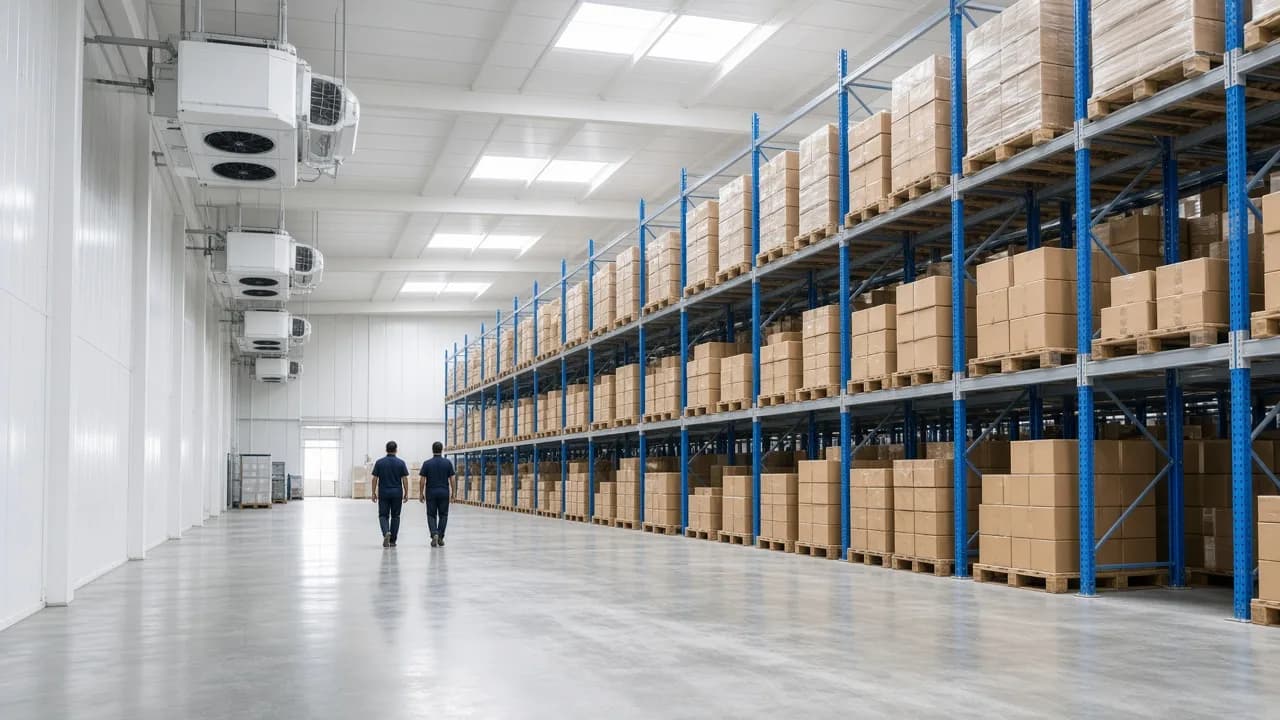
Ripening chambers can be integrated with chilled storage, cold rooms, loading areas, and temperature controlled handling facilities according to the overall project requirements.
Planning a Ripening Chamber Project?
Share your fruit type, required ripening conditions, chamber size, location, and operating requirements with our engineering team.
Temperature duty
Ripening conditions vary by fruit, incoming product condition, packaging, humidity requirement, airflow, and the intended ripening process. Temperature should be established from the actual product and operating requirement rather than applying one setting to every chamber.
+2°C to +8°C
Some temperature sensitive products require chilled conditions before or after the ripening process. The exact temperature is selected according to the stored product and its handling requirements.
Actual temperature and humidity requirements depend on the stored product and operational conditions.
Stored product
Different fruits behave differently during ripening, so the chamber design must reflect the product and process. Uniref develops systems around the required temperature, humidity, airflow, loading pattern, and operational sequence.
Bananas in controlled ripening are typically handled around 12°C to 18°C, subject to the fruit condition and specific ripening process.
Avocados in controlled ripening are typically handled around 12°C to 18°C, although the required conditions depend on the product and operating process.
Mango ripening conditions can vary with fruit condition, variety, temperature, humidity, airflow, and the required process.
Papaya chamber conditions are established from the fruit condition and the required temperature, humidity, airflow, and ripening process.
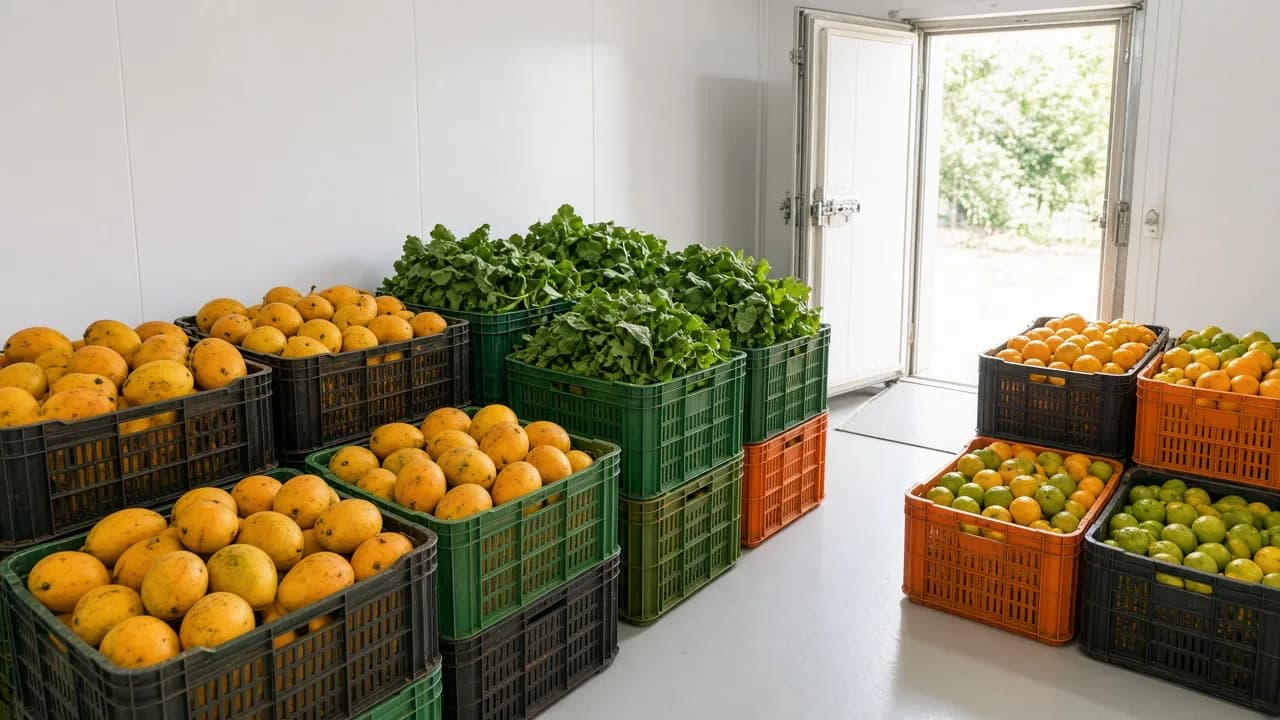
Pear handling conditions are determined according to the stage of storage or ripening, product condition, and required operating environment.
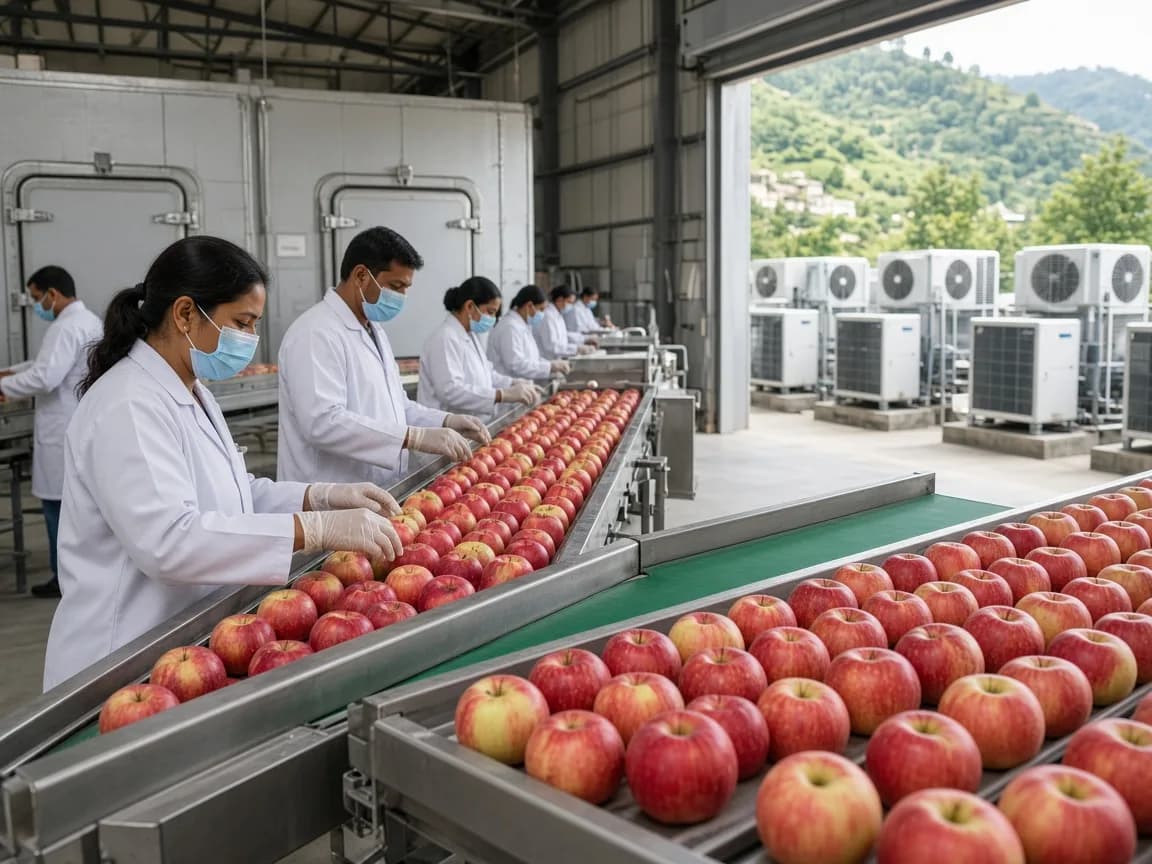
Kiwifruit requirements can vary according to the stage of handling, temperature, humidity, and intended ripening process.
Other fruits can require different temperature, humidity, and airflow conditions, so the chamber is configured from the actual product requirement.
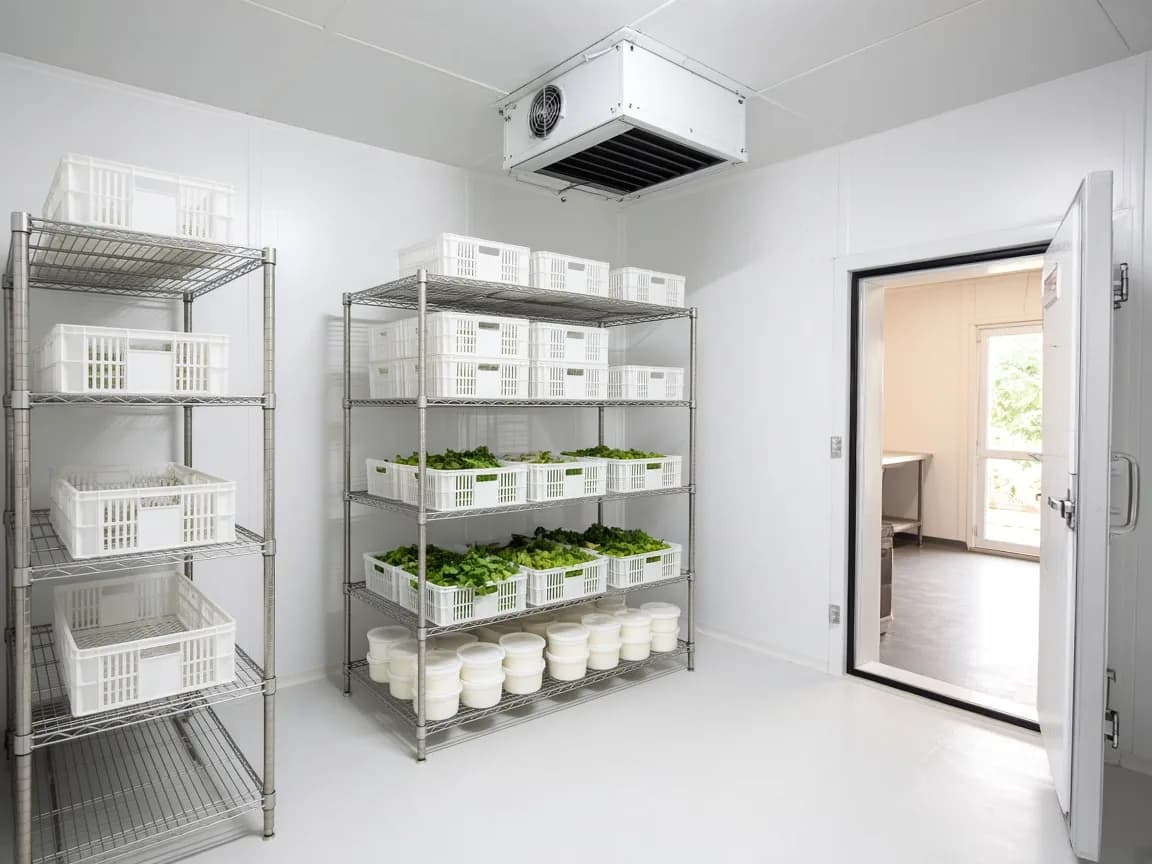
Where ripening is combined with holding or pre ripening storage, temperature controlled storage can be incorporated into the overall facility design.
Inside the chamber
The insulated room, refrigeration equipment, airflow arrangements, controls, sensors, and monitoring system are planned as one coordinated installation. Each component is selected according to the fruit, chamber size, operating conditions, site utilities, and ripening process.
Insulated panels form the controlled enclosure and are selected according to the chamber application and required operating conditions.
Doors are designed for the chamber opening, loading process, traffic pattern, and required thermal control.
Evaporator units are selected according to the refrigeration load, chamber conditions, airflow requirement, and available space.
Floor insulation and construction are considered according to the chamber temperature, loading conditions, and site requirements.
Airflow is planned to support suitable distribution through the chamber and around the stored product.
Outside the chamber
The refrigeration plant sits outside the chamber and is selected after the heat load, operating temperature, ambient conditions, and site utilities are known.
The refrigeration system is selected after evaluating the heat load, operating temperature, ambient conditions, and site utilities.
Condensing equipment is configured according to the refrigeration requirement and selected system arrangement.
Compressor selection is based on the refrigeration load, operating conditions, temperature requirement, and system configuration.
Controls and monitoring
Controllers, electrical systems, sensors, and monitoring keep the chamber on the defined ripening conditions.
Temperature controllers help maintain the specified operating conditions for the ripening process.
Electrical controls coordinate refrigeration equipment, chamber equipment, safety functions, and operating sequences.
Sensors can monitor temperature, humidity, and other selected parameters required for the operation.
Monitoring provides visibility into selected chamber conditions, equipment status, and alarms according to the project requirement.
Refrigeration
The refrigeration plant is chosen after the heat load, required temperature, ambient conditions, chamber size, product load, and site utilities are assessed. The refrigeration arrangement is not assigned as a standard configuration because each ripening application can have different operating requirements.
Freon based refrigeration systems can be selected for suitable ripening chamber applications after the refrigeration load and operating conditions are established.
Ammonia based refrigeration can be considered for applications where the project requirements and overall refrigeration plant make it suitable.
Air cooled and water cooled arrangements are selected according to the refrigeration requirement, ambient conditions, available utilities, and site infrastructure.
Compressors are selected according to the refrigeration load, operating temperature, system configuration, and required operating conditions.
Evaporator selection considers chamber dimensions, refrigeration load, airflow, product arrangement, and the required temperature and humidity conditions.
The defrost arrangement is selected according to the evaporator design, operating temperature, moisture conditions, and chamber usage.
Temperature control is configured around the specified ripening conditions and the operating requirements of the fruit.
Humidity management is considered where the fruit and ripening process require controlled moisture conditions.
Refrigeration controls coordinate the selected equipment and operating parameters to support controlled chamber operation.
Uniref also develops industrial refrigeration solutions where ripening chambers form part of a larger refrigeration facility.
Project delivery
Turnkey ripening chamber solutions bring engineering, equipment, installation, testing, commissioning, and handover into one coordinated project scope. The exact scope is established from the product, ripening process, chamber requirement, site conditions, and selected refrigeration system.
The fruit type, product condition, ripening process, temperature, humidity, loading pattern, and operating requirements are reviewed before design begins.
The available space, access, utilities, existing infrastructure, and installation conditions are assessed at the project site.
The refrigeration load is calculated from the chamber, product, ambient conditions, infiltration, equipment, and other relevant heat sources.
The chamber layout, insulated enclosure, refrigeration arrangement, airflow, controls, monitoring, and other required systems are developed around the project requirements.
Refrigeration equipment, evaporators, compressors, condensing equipment, controls, sensors, and associated components are selected according to the calculated requirements.
Required chamber components and selected equipment are manufactured or sourced and supplied according to the approved project scope.
The chamber, refrigeration equipment, electrical controls, sensors, monitoring systems, and associated components are installed at the project site.
The completed installation is checked and commissioned to verify the specified operating conditions and system functions.
The operating team is guided on the relevant equipment, controls, monitoring functions, and routine operating requirements before handover.
Support is available after commissioning for maintenance, troubleshooting, refrigeration service, and other project related requirements.
This structured process also covers cold storage design and installation when ripening chambers are integrated with temperature controlled storage facilities.
Project inputs
The right chamber starts with understanding what enters the room, how it arrives, and what conditions are required during the ripening process. Uniref approaches each project as a cold storage engineering company would, by establishing the product and operating conditions before selecting equipment.
What will be stored?
The fruit type and product condition determine the temperature, humidity, airflow, and ripening requirements that need to be considered.
What is the capacity in MT, pallets, or volume?
The required storage quantity helps establish the chamber dimensions, loading arrangement, refrigeration load, and available operating space.
What temperature are the goods when they enter?
Incoming product temperature affects the refrigeration requirement and helps determine how the chamber needs to be operated.
What quantity enters per day?
Daily product movement helps establish loading frequency, refrigeration demand, chamber utilization, and the operating pattern.
What is the operating range?
The required temperature range provides the basis for refrigeration selection, controls, insulation, and chamber operation.
What relative humidity is required?
Humidity requirements are reviewed according to the fruit and ripening process so that the chamber can be configured appropriately.
How much space is available?
Available floor area, ceiling height, access, and surrounding infrastructure influence the chamber layout and equipment placement.
How often do doors open?
The frequency of door opening and product movement affects thermal load and helps determine suitable door and airflow arrangements.
What is the local Indian climate?
Ambient conditions at the project location affect the refrigeration load and selection of the refrigeration system.
What power is available?
Available electrical supply and site utilities are reviewed before finalizing equipment and controls.
Is backup required?
Where backup power or other continuity provisions are required, the project team can consider them as part of the overall site requirement.
Operating efficiency
Operating efficiency depends on the complete chamber design, not one individual component. Insulation, refrigeration equipment, airflow, doors, controls, lighting, defrost, and temperature management are considered together during engineering.
Insulation is selected according to the chamber temperature, construction requirements, ambient conditions, and application.
Compressor selection is based on the calculated refrigeration load and required operating conditions rather than a generic equipment size.
Evaporator selection considers refrigeration load, airflow, chamber dimensions, product arrangement, and temperature requirements.
The chamber envelope, joints, doors, and openings are considered to limit unnecessary heat entry during operation.
Door selection considers chamber use, traffic, opening frequency, insulation, and the operating environment.
Airflow is planned according to the chamber layout, evaporator arrangement, product placement, and ripening process.
Controls help coordinate temperature, refrigeration equipment, sensors, alarms, and selected operating functions.
Lighting is selected with consideration for the chamber environment and the operating requirement.
Defrost arrangements are selected according to evaporator conditions, operating temperature, moisture load, and chamber usage.
Temperature monitoring helps operators observe chamber conditions and identify deviations from the specified operating range.
Monitoring
Ripening requires visibility into temperature, humidity, selected gas parameters, and equipment operation. A monitoring arrangement can be configured around the process so operators can review chamber conditions and respond when operating values move outside the specified range.
Example operator view
Illustration only
Chiller 1
4.1°C
Set band 2–8°C
Humidity
78% RH
Plant
Running
Sample figures shown here are illustrative. A live monitoring panel shows the rooms and operating information from that specific project.
Digital temperature monitoring provides visibility into the operating temperature of individual ripening chambers.
Humidity monitoring can be included where moisture conditions are important to the fruit and ripening process.
Alarm functions can alert operators when selected temperature, humidity, equipment, or system conditions move outside defined limits.
Data logging can record selected operating parameters for review and operational reference.
Remote monitoring can be incorporated where the project requires access to selected chamber conditions away from the equipment location.
The monitoring arrangement can display selected refrigeration and equipment status information for easier operational review.
High and low temperature alerts can notify operators when the chamber moves outside the defined operating range.
Multiple chambers and selected equipment can be brought into a centralized control arrangement according to the project requirement.
IoT integration can be considered when the operation needs additional connectivity, data access, or remote visibility.
Why Uniref
Ripening chambers require more than an insulated room. Uniref coordinates chamber construction, refrigeration, controls, monitoring, installation, commissioning, and after sales support around the actual product and operating requirement.
How it is designed
Each chamber is developed around the fruit, loading pattern, temperature, humidity, airflow, chamber dimensions, and site conditions.
Refrigeration load, insulation, evaporator selection, airflow, doors, controls, and defrost are considered together during system design.
How it is delivered
The project scope can cover requirement analysis, site assessment, engineering, equipment selection, supply, installation, testing, commissioning, training, and handover.
Refrigeration equipment and associated components are selected according to the calculated load, operating conditions, and project requirements.
How it stays running
Uniref supports project requirements across India, with engineering coordination from Jaipur and service coverage supported through its operating network.
Post installation support can include preventive maintenance, troubleshooting, refrigeration service, inspections, and other system support requirements.
Uniref works as a cold storage solution provider for businesses that need customized refrigeration and temperature controlled environments. Its experience as a cold storage company in India supports projects where engineering and site specific coordination are required.
Quality and safety
Uniref has quality documentation on file for cold rooms, heat exchangers, condensing units, and their parts, including ISO 9001:2015, certificate QMS/23M0934, GMP, certificate GMP/23M0935, and CE compliance with the Machinery Directive 2006/42/EC, certificate CE/23M0936. These documents were first registered on 7 April 2023, with recertification due on 6 April 2026. Ask the Uniref team for the current documents applicable to your project.

Quality management system. Certificate QMS/23M0934. Scope: design, manufacturing and trading of cold rooms, heat exchangers, condensing units and their parts.

Good manufacturing practices. Certificate GMP/23M0935. Same product scope as the quality system certificate.

Certificate of compliance CE/23M0936 with the Machinery Directive 2006/42/EC for cold rooms, heat exchangers, condensing units and their parts.
Materials used within the chamber are selected according to the application, operating conditions, hygiene requirements, and intended product handling environment.
Insulation, chamber construction, doors, and refrigeration are considered together to support the required temperature conditions.
Electrical controls and associated equipment are selected and installed according to the project requirements and operating conditions.
Selected refrigeration and chamber components are evaluated according to the system requirements before being incorporated into the project.
Chamber construction is planned with consideration for product handling, cleaning requirements, access, joints, surfaces, and the operating environment.
Safety functions and control arrangements are incorporated according to the refrigeration system, electrical equipment, chamber operation, and project requirements.
Uniref works as a cold storage manufacturer in India while also coordinating refrigeration engineering, supply, installation, and commissioning requirements.
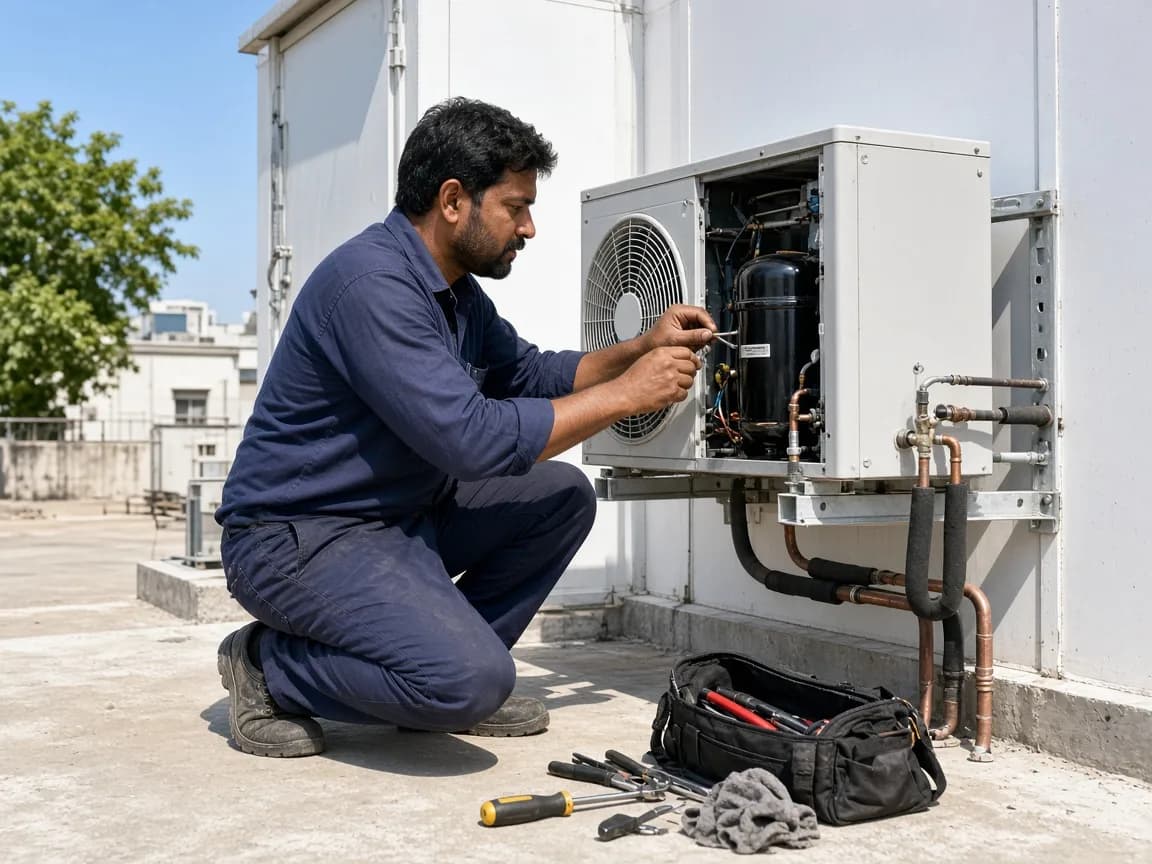
After sales
A refrigeration project does not end when installation is completed. Uniref provides post installation support for maintenance, inspection, troubleshooting, refrigeration service, and system related requirements.
Planned maintenance helps inspect refrigeration equipment, controls, electrical systems, sensors, doors, and other relevant components.
Annual maintenance arrangements can be considered according to the equipment, facility requirements, and selected service scope.
Support can be provided for refrigeration and equipment issues that require inspection and corrective action.
Required replacement components can be assessed according to the installed equipment and system configuration.
Periodic inspection can review chamber conditions, refrigeration equipment, controls, sensors, insulation, doors, and other relevant system elements.
Operating conditions and equipment performance can be reviewed when adjustments or engineering changes are required.
Refrigeration repair requirements can be assessed and addressed according to the installed system and identified fault.
Existing systems can be reviewed for selected upgrades or retrofit requirements based on equipment condition and operational needs.
Uniref also supports customers as a cold storage installation company, with project support extending from installation through ongoing refrigeration service.
FAQ
The right ripening chamber depends on the fruit, incoming product condition, required ripening process, temperature, humidity, loading pattern, chamber size, packaging, and site conditions. Bananas and avocados in controlled ripening are typically handled around 12°C to 18°C, but this does not mean the same setting applies to every fruit. Uniref reviews the product and operating process first, then develops the chamber and refrigeration configuration around those requirements.
Project enquiry
Share the fruit or product you handle, required ripening temperature, approximate capacity, and project location so our engineering team can understand the application and define the next steps.
Name and phone are required. Other project details can be shared through the form.